Category Archives: Travel

A New York Girl In Old San Juan

I didn’t expect “beautiful.” No, not necessarily. Puerto Rico isn’t the most culturally “exotic” place for a New Yorker to visit since we’ve actually got more Puerto Ricans in NYC than there are in San Juan. Plus, the island is a US territory; although they consider themselves their own country, culture, and nationality, no passport is required for Americans to enter (nice!). But I did want a taste. I wanted to know what it would feel like to walk the streets of Old San Juan surrounded by Puerto Ricans and enveloped by warm ocean breezes, rather than riding the subways of New York City surrounded by the same people all bundled up in the frigid stillness of an East Coast winter. It quickly became clear that, even while many Puerto Ricans and I call New York City “home,” this island, this colonial city, is where their heart is. And for one week, mine got to be there too.
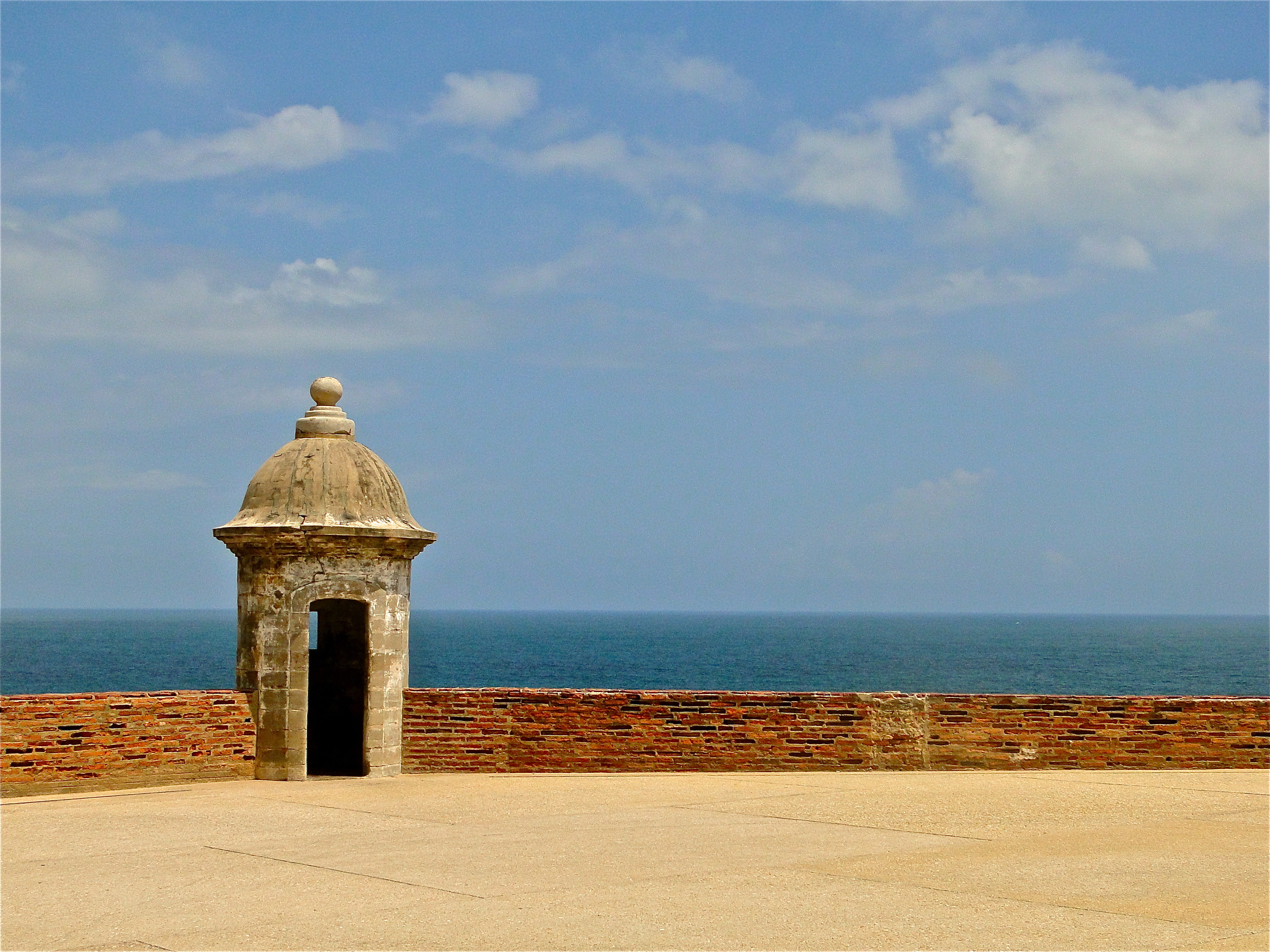
View from Fort of San Cristobal. Old San Juan, Puerto Rico.

Part of me expected Spanglish to fly out of everyone’s mouth, because that’s what I’m used to in NYC. But when you’re on the island of Puerto Rico, you’re far, far away from the urban jungle. I found myself speaking Spanish like I was in South America — how I love when I have to speak Spanish. While most locals speak English as well as Spanish, many do not. I quickly realized that I was farther away from the US than I expected to feel, although the first sight of a Starbucks, Chili’s, and Walgreen’s helped to remind me of the connection. It’s Miami meets Cuba meets New Orleans. That’s how I’d sum up this town. The Latin energy thickly coats the muggy nights, and the colors, architecture, and rhythm are undoubtedly Spanish-influenced. It’s exotic but familiar, foreign but navigable, us (U.S.) but them, here but there

Old San Juan, Puerto Rico.

Often when I travel, especially to Latin American cities or even Caribbean islands, I find myself confused by a feeling that I am almost more in my element and more at home in these places than in my beloved Manhattan. I definitely feel more at home in Latin cultures than anywhere else in the US where, even though I look white, I never feel as white as the general culture around me.
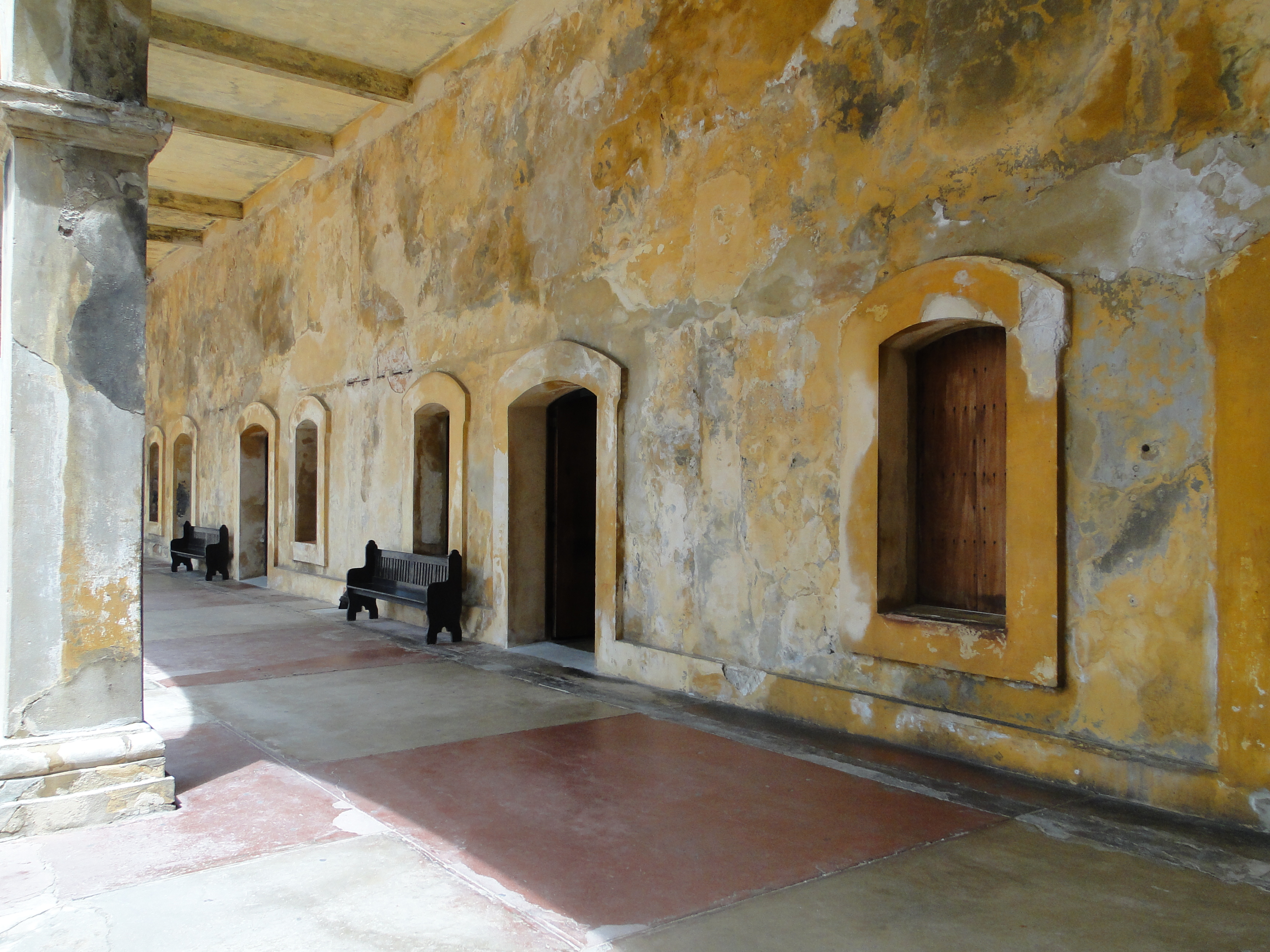
Fort of San Cristobal. San Juan, Puerto Rico.

I love to dance. For anyone who doesn’t know that, there it is. But, as I have joked, I can’t really dance to “white people” music — the kind they play at weddings and in well-lit rooms. It just doesn’t feel natural. I’ve got to get my hips shaking and I need the right beat, but without forcing anything — it’s got to just start happening on its own. I like to get close, to sync-up with another person charged by the music. I like to be spun and led by a Latin man who knows how to work it. I can’t just listen to salsa, merengue, reggaeton, reggae, bachata, cumbia, dancehall, soca, tango, etc. and not MOVE. It gets in me, as white as I may seem, and works its way through me with a determined vigor that rock (or whatever you call it) just doesn’t give me.
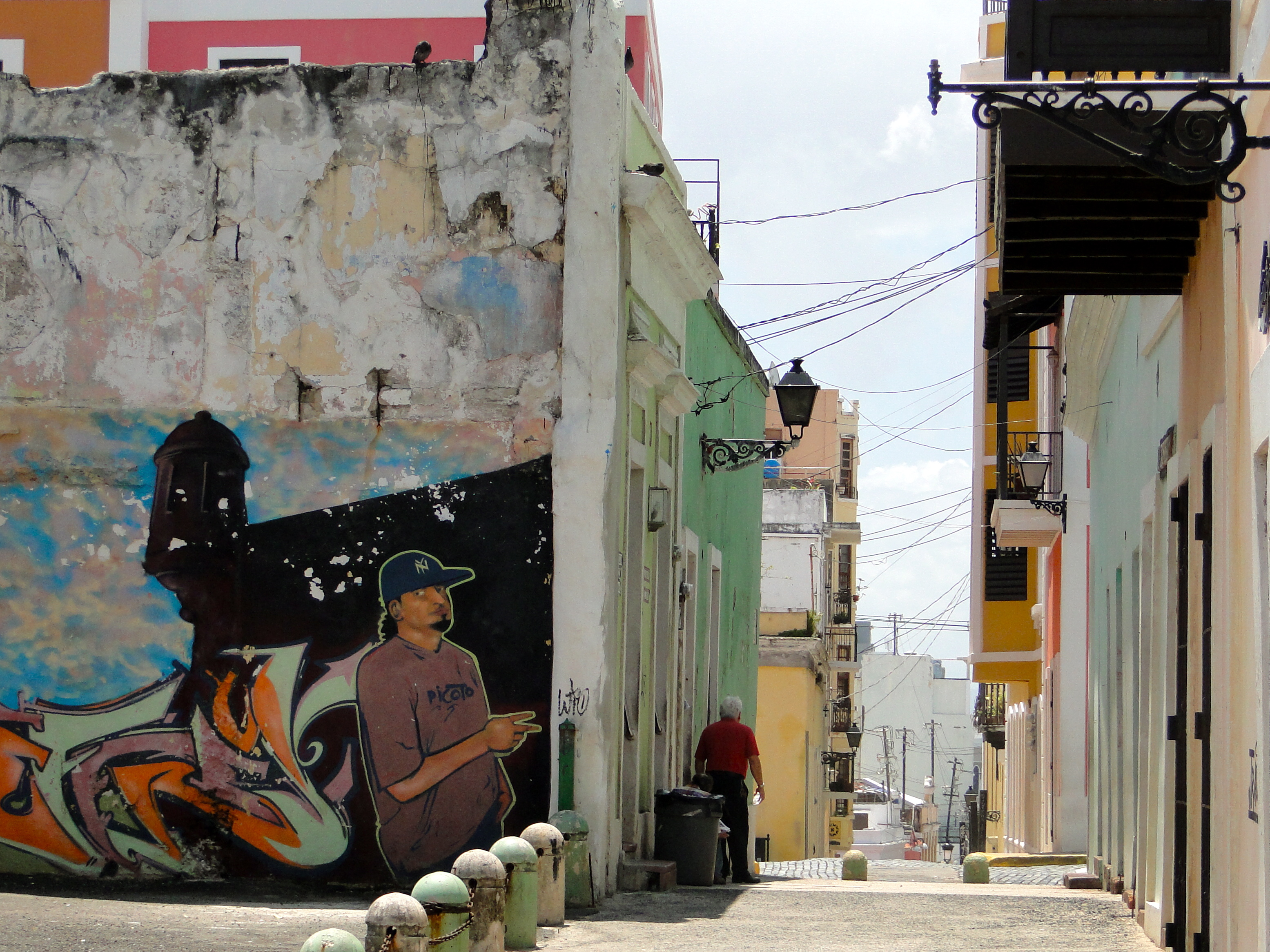
Graffiti in Old San Juan. Puerto Rico.

This all became extra clear on Saturday night, when my mom, my sister, her Australian boyfriend and I headed to the Hotel San Juan just down the street from our swanky hotel, where we were told the locals love to go for the live salsa music and dancing. We sat in the old, massive lobby and watched as Puerto Ricans of all shapes, sizes, and ages got up and shook their hips, gliding across the dance floor with their partners in an effortless haze of natural talent. These people are so unafraid, so uninhibited, so free and HAPPY when they dance — and boy can those men dance! At one point, we all found ourselves completely mesmerized by the hips of a tall dark-skinned man with moves that could slay vacationing gringas with one perfectly placed thrust. Women wore anything that resembled second skin — words that come to mind: short, tight, revealing and/or excessively sparkly. Men wore loose, airy button-down t-shirts with white belts and comfortable pants, many with that dark complexion that beckons a panama hat and cigar. They danced because they couldn’t help it. They danced because it was in their sangre. They danced and danced and all I wanted to do was transport this place to New York, take all of this energy with me, and dance with them as one of them on my island. But this time, I was an onlooker.
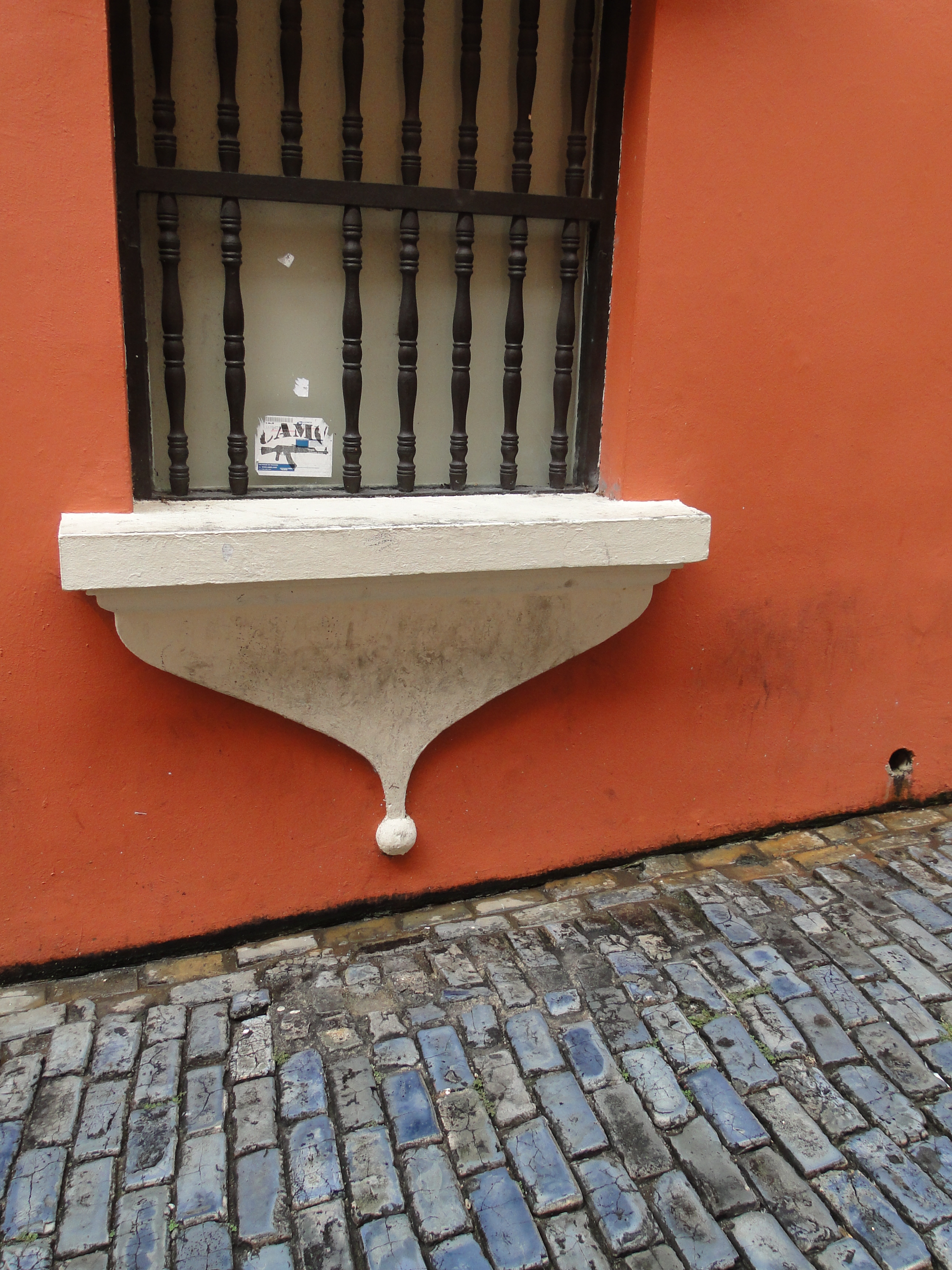
Window and cobblestones. Old San Juan, Puerto Rico.

It made me nostalgic for Ecuador, where every Wednesday I would go salsa dancing with a combination of gringas and Ecuadorians (shout out to Victor, my favorite dance partner!). That’s probably what I miss most about living in South America: the dancing. The constant liberty to just move if you felt like it — the inevitability of dancing. This is what the US lacks. Americans can be so up-tight on the dance floor — so afraid. Especially the men. (Of course, this is certainly not ALWAYS the case.) It just isn’t a part of the culture the same way it is in the Caribbean, Africa and Latin America. And it’s not in Americans’ (oops, “our”) blood to just MOVE, to let a beat take them wherever it wants to, and to let go. When I travel and dance in other countries, all I want is to take these places and the people back with me to Manhattan where I can feel at home in my hometown. And yet they’re already here, already transported, immigrated, mixed right in. But it’s different here, on the continental US. The energy, the music, the weather — it’s just different.
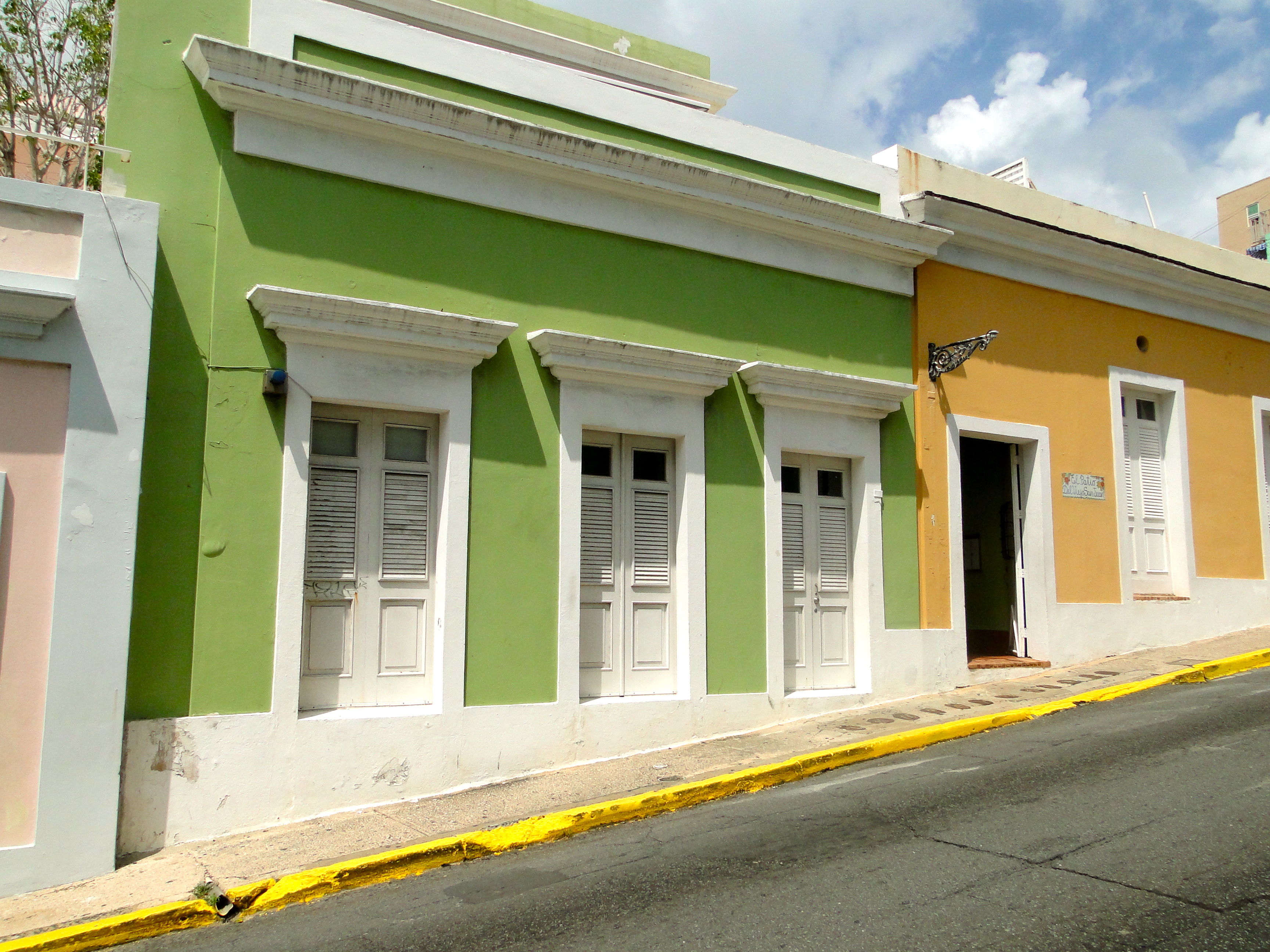
Colorful homes in Old San Juan, Puerto Rico.

I’ve got to say: I loved Old San Juan. I was expecting it to be a little seedy or run-down, but it was quiet vibrant and — the travel writer’s most despised adjective — charming. Not to mention, Puerto Rican men can be quite friendly when you wear short shorts… Yeah… Hehe.

Ok let’s see if I can paint the picture for you: Imagine you’re walking up a hill, two sixteenth-to-eighteen century fortresses to your right are separated by a large expanse of bright blue ocean. To your left, a dark man with a potbelly in a too-tight bright green t-shirt shakes a bell, letting you know he’s selling coconut and mango flavored ices. Another man sells potato skins in a rolling cart. An overwhelmingly warm morning is whipping around you in the refreshing ocean breeze. When it stops, you realize your sunglasses are sliding off your sweat-slicked nose. The tops of your feet are burning a little in your flip-flops, but despite the excessive heat, the air is light. The streets are filled with colorful colonial-style homes, with balconies and shutters that remind you of the Creole-Caribbean influenced houses in the French Quarter of New Orleans. All the streets are cobblestoned and lined with leafy trees, bright magenta flowers, and the occasional graffiti. The energy is new even though the city reeks of history, pirates, cannon ball fire, large ships with the quest to conquer, and footprints of the Spanish.

Ship sketch on wall of dungeon in Fort of San Cristobal. San Juan, Puerto Rico.

Dome next to El Morro. San Juan, Puerto Rico.

Especially after the sun sets, Old San Juan comes to life from beneath the heat. Pulsing with a newfound chic-ness, this city is anything but dead or run-down. Puerto Rican food is generally unhealthy — chincharrones (the Puerto Rican interpretation of chicken nuggets) and fufu or mafongo, a sort of stew with a base of mashed plantains and black beans — are staples here. However, either I had very good luck with our restaurant selections for the week or Old San Juan has an amazing little selection of Nuevo-Latino restaurants with with which to play. (See list at the end of this post.) Let’s just say I ate well. Like, really well.

Tres Banderas: Spanish Military flag, Puerto Rican flag, American flag. El Morro. San Juan, Puerto Rico.

For those wondering, this was a family trip. Every year, my family (of seven) tries to do a spring break together. It’s a tradition that, for most families, fades after high school, but in ours, it has managed to continue, albeit with the occasional sibling missing in action. One nice perk to dating a Tavel: you get to join, courtesy of my dad. Not too shabby… Not that you need ANOTHER reason to date or hang out with me, but there it is. (HA! SO JUST KIDDING. This better be obvious.) Not bribing. Just sayin’…
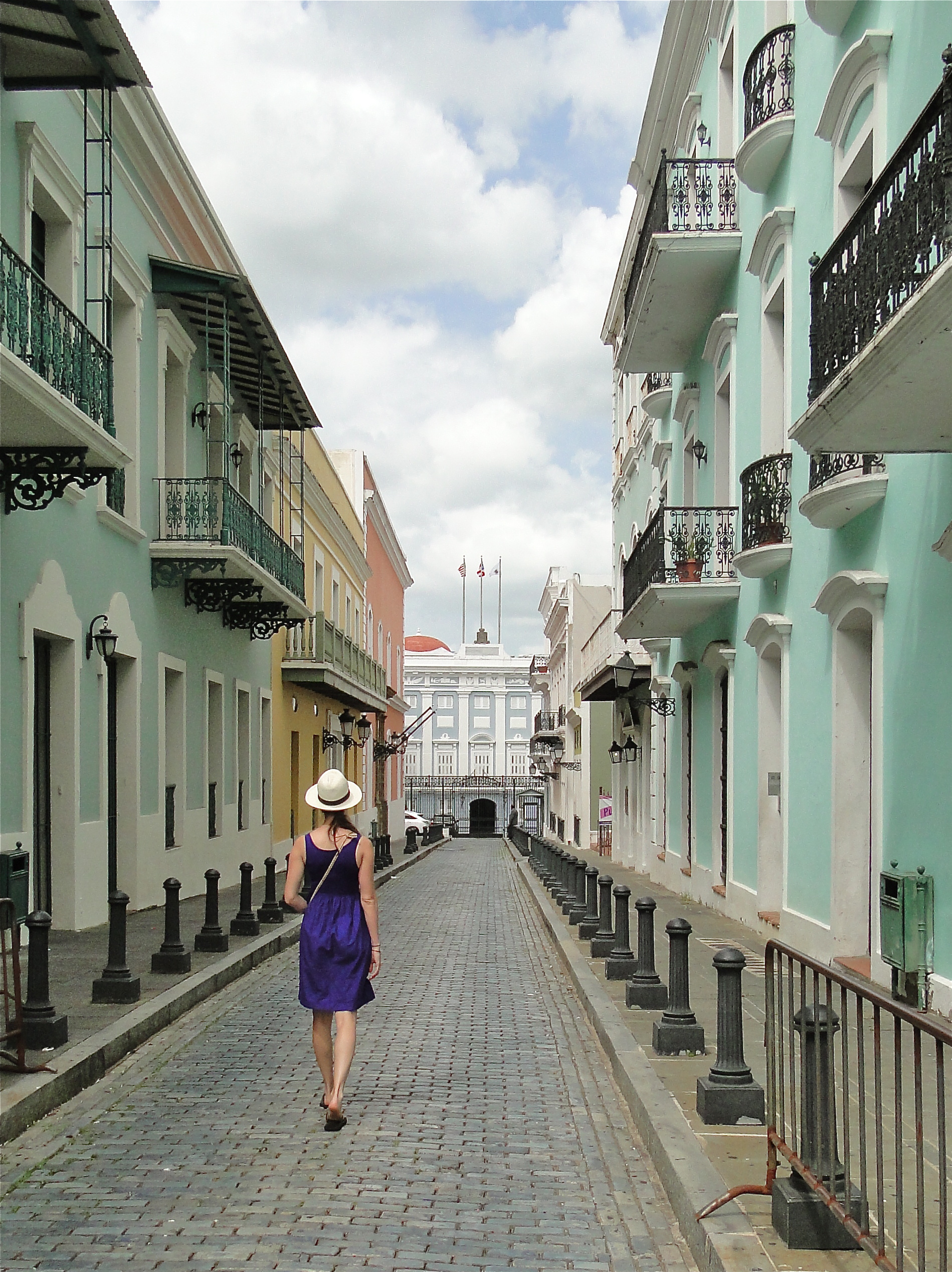
Me strolling through Old San Juan.

Since I graduated from college, the annual Tavel spring break has taken me to Turkey (Istanbul), Argentina (Buenos Aires, Salta, Tucuman, Cafayate, Purmamarca), Portugal (Lisbon, Sintra), Austria (Vienna, Salzburg, Bruck), Italy (Rome, Pompeii, Vatican City), and now Puerto Rico. As you can see, most of the trips have been to European cities, where we spend our days exploring museums, ruins, and general neighborhoods in a nonstop fury of productivity, punctuated by heavy, excessively delicious three-to-five course meals that often happily backfire on us and slow things down. Getting four adult kids and an opinionated, sassy Argentine mom to agree on the daily itinerary can be trying, at times. It often feels like the opposite of vacation, and sometimes – by the end of the trip – I find myself needing another one just to dilute the intensity of the phantom vacation I supposedly just had. But it’s also wonderful, and it means a lot to my parents that we are still happy to do these trips. That said, I always end up in the middle  seat on every flight when I specifically request the aisle (why, WHY, will no sibling every trade with me!?). My mom acts like an excited puppy when she sees good shopping, at which point my impatience begins to take over (I am not a shopper). We all just have slightly different agendas, and it takes a lot of bending and shutting up to make things work in a big family. Alas, it somehow always does…in its own way.
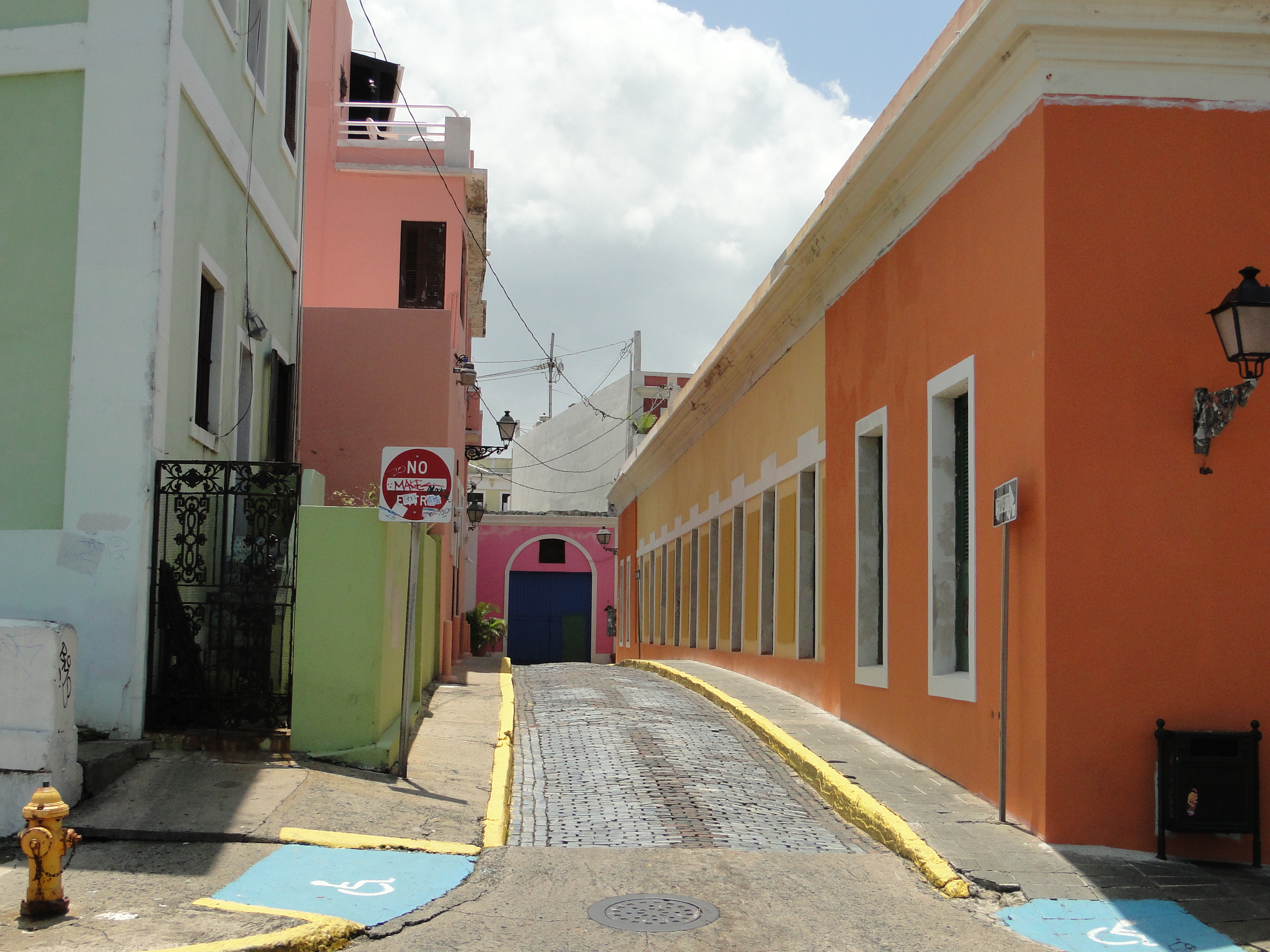
Colorful street. Old San Juan, Puerto Rico.

Needless to say, it’s getting harder and more complicated to pull off these trips without a clash of opinions, priorities (mine are always cultural – the art, the food, the people, the street life, the history, the desire to take in the big picture of a place), and moral/existential/social/personal preferences. To try something different (and save a little cash), I thought we should go somewhere that could combine our interest in another culture with our desire to completely RELAX (you know — the point of a vacation), and suggested Puerto Rico.

El Morro. San Juan, Puerto Rico.

To my happiness, this worked out PERFECTLY. Every morning, we’d sip our Puerto Rican coffee on the balcony of our hotel overlooking the ocean, and spend most of each day either basking in the sun by the pool, or submerging ourselves in the warm sea. We’d go for daily walks up and down the beach of Isla Verde, and order the occasional pina colada, mango smoothie, or beer from the comfort of our bright blue pool-side chairs. Most evenings, we’d venture into Old San Juan for a trendy restaurant, and spend a morning or two casually strolling through the city, only to follow the effectively calm morning up with an afternoon nap by the water. It really was heaven, and for a change, it truly felt like a vacation.

Beach. Isla Verde. San Juan, Puerto Rico.

And now we’re back in New York City. Gone are the beaches and the palm trees, the waves of calm water, the cilantro and plantain-filled meals, the constant pulsing desire to move my hips and speak Spanish. But here in Manhattan, I’ve still got the Puerto Ricans. A girl like me can only hope that I will find myself a slice of that Old San Juan energy somewhere within the crowded streets of this less tropical and slightly less Latin island that, like for many Puerto Ricans, I call home.

For those of you actually traveling to Puerto Rico, here are some restaurant suggestions:

Tavel’s Old San Juan Dinner Picks:

Marmalade. Considered “the best” restaurant in Old San Juan, it was an easy choice for the Tavel clan. The restaurant is very trendy, but backs it up with a really delicious and funky Latin-inspired menu. I opted for the four-course tasting menu, which included a paella with smoked chicken, then an unforgettable white bean soup scented with truffle oil and dusted with pancetta, followed by a perfectly tender beef tenderloin in a cabernet-rosemery jus with roasted mushrooms and three cheese potato gratin, and topped off by a killer chocolate mousse. Before dinner, I sipped a honey-chamomile martini (for a girl who hates sweet drinks, this was a good choice as it was like a chill, alcoholic version of relaxing and strong chamomile tea with honey). White curtains dangle between diners, and the hip but relaxed atmosphere of this primely located San Juan restaurant — not to mention the memorable food — hit the spot. It’s a great place to celebrate anything, or nothing. Basically, just come up with some excuse to go here if you find yourself nearby. www.marmaladepr.com.

Baru. The tapas-style menu, along with the flamenco music on the speakers and the outdoor courtyard in the high-ceilinged Spanish-style building, will temporarily transport you to Southern Spain. I loved this restaurant from the moment I walked in. Immediately, the interior architecture makes you feel like you could be in someone’s home, with the small rooms having the natural flow of a house, and the outdoor seating small enough to be intimate beneath the shade of a big palm tree, but large enough to feel you’re on your own even surrounded by other diners. Highlights of the menu include a salad with greens and incredibly sweet mangoes, plantain chips in fufu and a spicy black bean dip, amazingly light pan seared scallops in a coconut curry sauce, a delicate asparagus risotto, a fresh paper-thin halibut carpaccio, and possibly the best chocolate mousse I’ve had in a long time. The vibe is a perfect island calm, and it’s a great place for a small group dinner or a romantic evening for two. After dinner, the restaurants and bars on this famously beautiful street, San Sebastien, fill with locals grabbing a quick bite or setting up for a night of live salsa. www.barupr.com.

Dragonfly. Located on a bustling Old San Juan street with a string of outdoor dining just outside, this restaurant was modeled after a Shanghai opium den. The atmosphere is hip at this Latin-Asian restaurant, which provides a great getaway from the Puerto Rican standards while incorporating the strengths of the island’s flavors. The dark, red seductive interior goes well with dishes like the criollo BBQ pork steamed bun sliders, the pork and amarillo (plantain) dumplings, and the miso-honey halibut. Creative cocktails and tapas-sized dishes make for a fun dinner experience. More sexy than casual, I’d definitely go back — perhaps with a nice Puerto Rican man rather than my family, the second time around. If you can stomach it, try the ginger tres leches dessert. www.oofrestaurants.com.

And here are a few songs to finish off this post and complete your immersion into the San Juan mood (as always, ignore the actual videos and just enjoy the music):

Feel free to add links to your favorite salsa music as a comment!

3 Comments

Filed under Food, Islands, New York City, Puerto Rico, Travel, Uncategorized, USA

And Nothing Happened…

I don’t know much about avalanches, but today’s TwT contributor, Tom H., came very close to learning a bit too much about them. As one of the last  (if not the last) guest contributors for February Contributor Month, let’s see if we can dodge a few avalanches with him.

By the way, I took the month of February off to see what a month might bring in terms of my future plans. During this month, more than I expected has come together. You’ll have to wait for the next post, written by ME, to finally learn more about that…

And Nothing Happened

By Tom Hazel.

On Sunday January 30th, 2011, I sat in a conference room at the AMC Highland Center in Crawford Notch, New Hampshire. The avalanche awareness course I was taking was almost over. The last thing we did was watch a short documentary called, “A Dozen More Turns” (Parts 1, 2 and 3), which describes an avalanche that struck five experienced skiers on a hut trip in Montana. The avalanche danger was High, but the skiers stayed in the trees on a low angle slope, hoping to mitigate their risk. As Doug Chabot, says in the film, “they were doing a lot of things right,” but the risk was High, they still went skiing, and someone didn’t come home. In that moment I decided that I wouldn’t go skiing when the avalanche risk was Considerable or High. Easy decision.

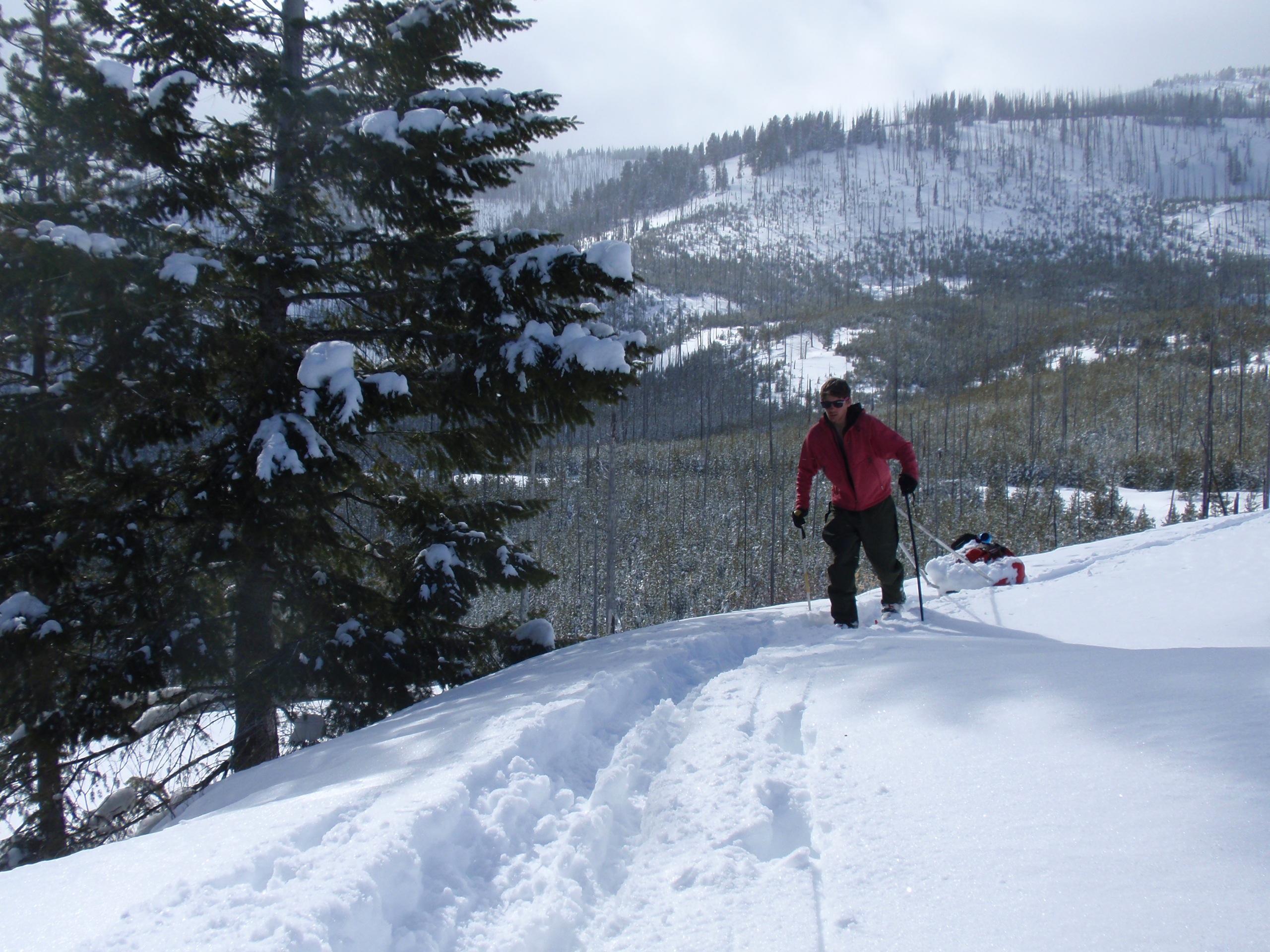
Tom H. (red jacket, white goggles) and friends. Photo by John Davies.

Four weeks later I found myself on a similar trip in Eastern Oregon with an eclectic mix of friends hailing from New England, Texas, San Francisco and  the Pacific Northwest. We knew going in that the avalanche danger was Considerable-High because of an unstable snow layer about three feet below the surface. Here I was on my first trip after the avalanche awareness course, and already I was being tempted by great snow to break my own safety rules.

Just like the guys in “A Dozen More Turns,” we started out by playing it safe. On day one we decided to stick to some low angle terrain covered in trees. Both the angle and the trees make avalanches less likely.This was my first backcountry trip and I was nervous in the first place. The more experienced members of the group seemed cautious, but not worried. The only experience I had with this area was reading the avalanche forecasts before the trip. These guys knew what they were doing; they wouldn’t be putting themselves at risk, right?

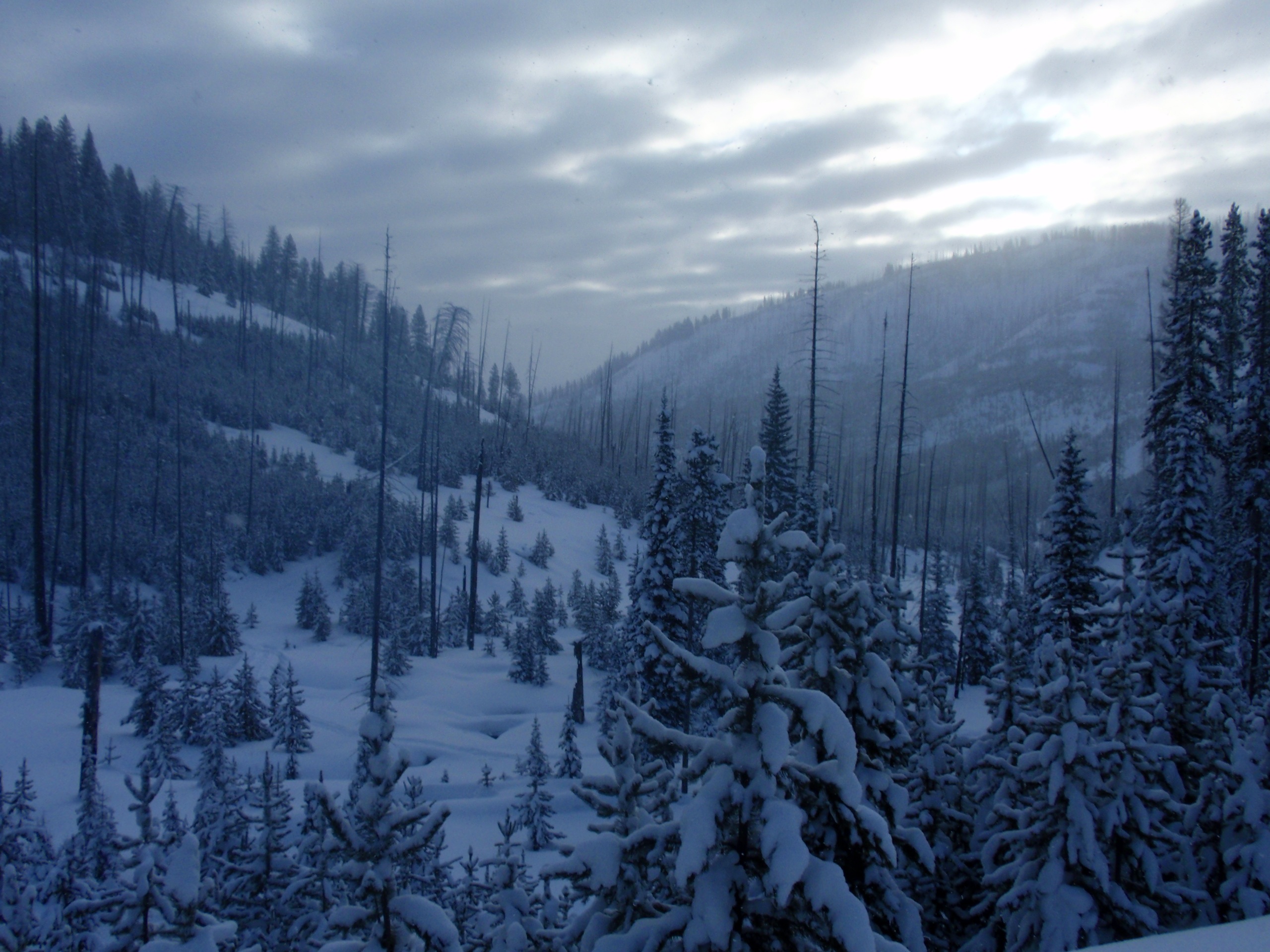
Snow-covered mountain. Oregon. Photo by Tom H.

We picked out the lowest angle route up to the top of the ridge. Low angle was the theme for the day. Most avalanches occur on slopes between 35-45 degrees. Slopes under 30 degrees are considered pretty safe. The downside in our situation was that there was too much snow to ski on slopes much less than 30 degrees. With 20 inches of new snow, a 25 degree slope isn’t really steep enough to ski on; it ends up being more of a hike downhill. Any slope above 30 was potentially unsafe, anything below 30 was almost unskiable. We had a clinometer (a tool for determining slope), and the route up was just about 30 degrees.

On the way up we heard a loud WOOMPF. A “woompf” is a scary thing in the backcountry. Imagine you’re minding your business, hiking up a nice 30 degree slope, when all of a sudden you hear a loud sound from under you. Your skis drop an inch and all the snow on the surrounding trees falls off. We immediately looked for signs of an avalanche.

Tom's friends Sam and John examining layers in a snow pit. Oregon. Photo by Brian R.

In this case, nothing moved.  The sound is caused by a layer of snow collapsing somewhere beneath you. A woompf gives a skier two important pieces of information: First, there is indeed a weak snow layer somewhere beneath you; and second, your weight is enough to collapse that layer. Neither of these pieces of information bode well for a safe trip. A bit shaken, we pressed on being sure to stay away from open areas.

Another WOOMPF. Shit. Should we really be up here? I knew that we were on a slope angle that was supposed to be safe, but I sure didn’t feel safe. I tried to keep my heart rate down and not freak out. I was sweating, but not from the hiking. It was that nervous kind of sweat that you get when speaking in public or waking up from a bad dream. We backed down the slope a bit and changed course, hopefully in a safer direction.

Before too long, we made it to the top of the ridge. Our ideal route would have taken us down the steeper northwestern side of the ridge. We dug some snowpits on that side of the ridge to test stability. As it turns out, the northwest side of the ridge was not very stable, so we went back to the lower angle side. We skied each pitch one at a time, in case anything happened. I was pumped to start heading downhill and it was great to make a few turns. The snow was amazing, but the low angle meant slower skiing. Despite my apprehension at every turn, we all ended up at the bottom, safe and sound. We were happy and wanted more. We took a couple more laps along the same route, accompanied by the sound of a a few more WOOMPFS, but nothing else.

Slope in Oregon. Photo by John Davies.

I was worried. The “woompfing” really freaked me out. I wasn’t sure if it made sense to ski another day. The group made the choice to ski a bit steeper terrain the next day. Being cautious and remembering the documentary, I decided it wasn’t worth it and stayed back at camp. In the afternoon people started trickling back in. They spoke of an amazing day of skiing. Once again, everyone came back safe. Maybe I was being too cautious.

With a 10 am departure from camp, only the early risers had time to ski on the third day. Four of us woke up early that morning to try to get a last few turns in. We got our gear on and left around 6:30 am. We hiked up a southwestern slope right behind the camp — the steepest we’d skied all trip — but it was nearby and there hadn’t been any problems so far, so we thought there wouldn’t be too much more risk. I heard a couple big “woompfs” and a couple small ones on the way up. The trees were tightly packed, but we were hiking up right next to a more dangerous open area.

Trees are a mixed blessing in avalanche terrain. A group of tightly packed trees can make a slope more stable. The cumulative effect of many trees adds stability to the snowpack. However, trees by themselves can cause problems. Snow tends to be thinner and less cohesive around the base of trees. Especially conifers with their wide bases. When the snowpack is less cohesive, it is easier to break off and cause an avalanche. Areas that are completely devoid of trees make for some of the best skiing, but since there are no anchors to hold the snow in place, they are riskier.

We decided not to hike up to the top because we would’ve passed through an open area. We got ourselves ready to head down through a tight cluster of trees. I was the second to go and followed the first set of tracks pretty closely. There was an easy pitch at first, and I made some nice turns before rounding a corner into another slope. It was much steeper, just the sort of thing we were supposed to avoid. I can remember my brain splitting into two parts: One part of me knew it was some of the best skiing I’d ever experience, the other half was petrified about starting a slide. I made my first few turns and then…

Nothing happened. There was no slide. The snowpack felt solid below my skis. We were all fine.

Freeland (Tom and my friend) hauling a sled full of gear out from the huts on the last day. Photo by Tom H.

On the five mile hike back to the car I was swimming in thoughts about the experience. Was I a better skier now because I had experienced more difficult conditions? Or had I lost some of my fear and respect for what I was doing? Was I more likely to make bad choices because nothing happened? Did we just get lucky?

I guess there’s no way to know until the next time I head into the backcountry.

Tom Hazel is a software engineer by day who splits his time between Boston and Austin. He spent a year shoring up his skiing chops in Salt Lake City, but has since settled down on the ski hills of New England. Tom shares some Barcelona routes with the Tavel herself, but most of his recent travels have been centered around finding good snow. You can follow him @TheRealTHazel.

3 Comments

Filed under Contributor, Natural Disasters, Travel, Uncategorized, USA, Winter

Peru, Bolivia, and a Nonexistent Basement

Living in an Andean country has its challenges. Remember my little friend, Juan the Amoeba? Well, I just want to announce once and for all that he is 100% DEAD. I already suspected he had evacuated the premises, but now I know for sure. Juan, you and your family will NOT be missed!

Then there was the coup attempt, several attempted robberies, and the simple fact that living in a South American country — no matter how beautiful, no matter how sexy it sounds — isn’t always that easy. But sometimes the challenges have nothing to do with what’s happening on the “outside”; they spur from the personal choices we make, and the struggle to both give and take from these decisions.

Well, I’m not the only one who has tossed her hands up in the air, given up the comforts of home and taken on an adventure in the Andes. Today’s guest blogger, Julie, shares her honest mixed feelings about a deep-seated desire to uproot herself from both her American and Danish homes, while acknowledging that sometimes there’s nothing quite like watching a football (no, not soccer) game at a Massachusetts bar with old friends, and blueberry pancakes.

Contemplating Life and Moving into my Parent’s (nonexistent) Basement

By Julie.

In two weeks I’ll be finishing up a 7-month stay in South America, of which I’ve spent 3 months in Peru and 4 months in La Paz, Bolivia, working for a microfinance organization as part of my master’s studies. What a perfect time to do some REFLECTING! There’s a lot of stuff I could reflect about – the expectations I had before leaving and how the reality has matched up, what I’ve learned about the world of international development (and perhaps what role I want to play in it), how I’ve grown professionally or personally…

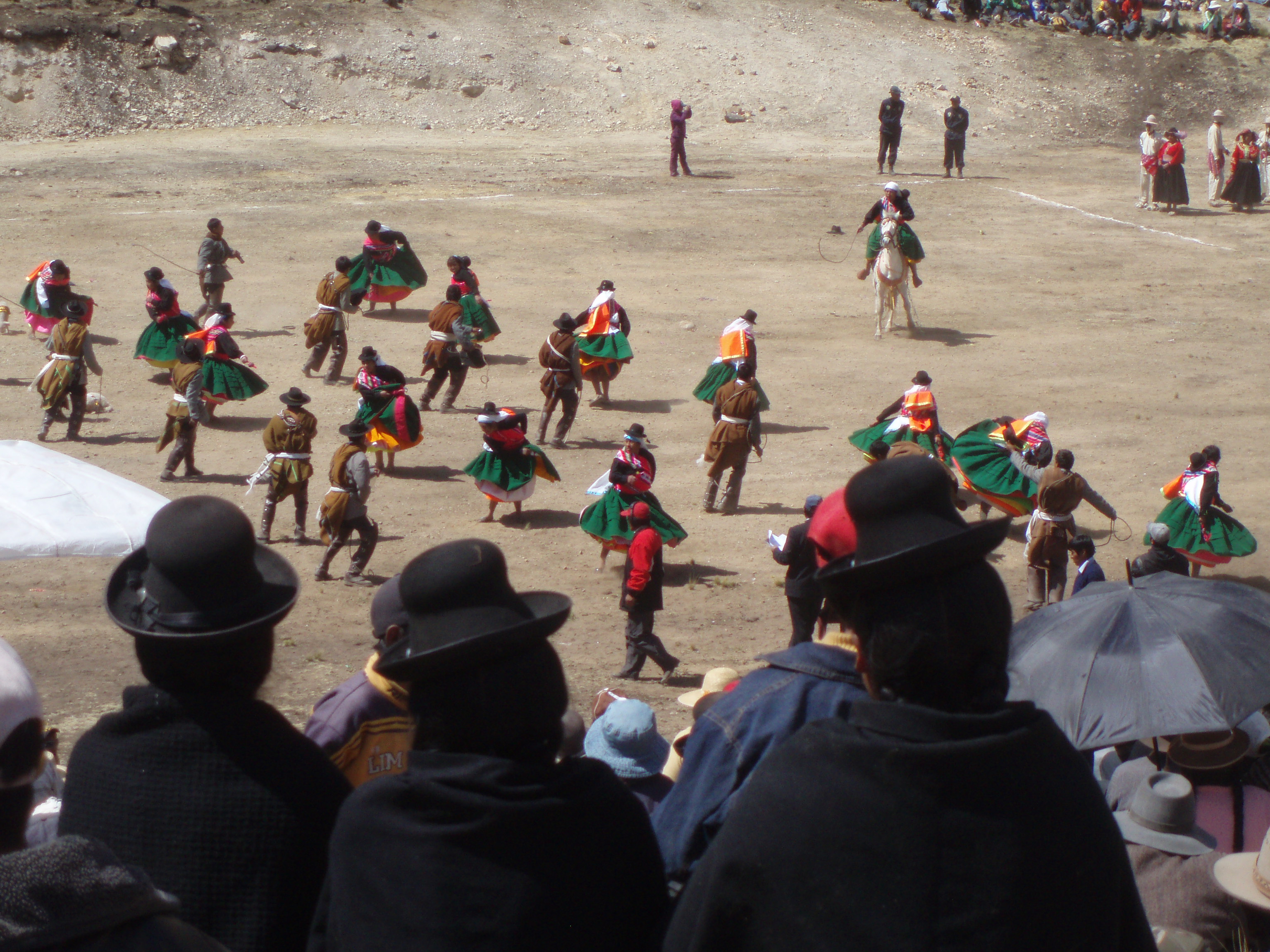
International dance festival a few hours outside Puno, Peru. Photo by Julie.

To provide some background – I grew up in the States, but a longtime fascination with my mother’s native Denmark lured me to the other side of the Atlantic at the age of 21. I have been based there ever since (approaching 5 years). On top of this, I am pursuing a career in international development, so naturally, I get these questions a lot: Where do you want to live when you grow up? Where are you going to settle down? Even if other people weren’t asking me, I wrestle with these questions on my own. And even if I told you right now where I thought I would end up, my answer would probably change tomorrow. Not only am I torn between the choice of living in the developed or developing world (where the work is naturally more interesting), but the Denmark vs. America choice also factors in.

These last 7 months have reminded me that there’s something truly special about being abroad, the people you meet and the friendships that develop (when I say being abroad, I am not including time spent in Denmark, though that is special too…in a different way). One of my all-time favorite social scenarios, one I encountered both when I backpacked through South America and again now, is being out to dinner with a huge group of people from all different countries, where I haven’t known anyone for longer than a few weeks or months (in the case of backpacking, it was more like hours).

Preparing Juanes (a traditional Amazonian dish) at a friend's grandmother's house in a small village down the river from Pucallpa, Peru. Photo provided by Julie.

That being said, a recent trip home to Boston for a friend’s wedding reminded me of a very different type of social interaction (or togetherness), one I definitely didn’t value enough during my angsty teenage years. I’m referring to the time spent with the people that were there to witness the sweatpants and matching turtlenecks, the mini-backpacks, and the braces and bushy eyebrows.

My “sheltered” upbringing in a small suburb of Boston always pushed me to seek opportunities away and abroad, but in my older (eh herm, wiser?) years, I’ve really come to appreciate the phenomenon of “this person has known me my entire life.” And holy crap there’s something comforting about spending a Sunday afternoon, tired and knowing you aren’t your most attractive nor coherent self thanks to the champagne in the bridal suite at 4 am, watching the Patriots game at a bar and realizing the people sitting in the booth with you know you better than anyone and don’t really care that you sort of look like crap. I’m not joking when I say that the week home left me thinking it was time to call it a day with all the traveling and move into my parents basement. (A decision slightly complicated by the fact that we don’t have a basement.)

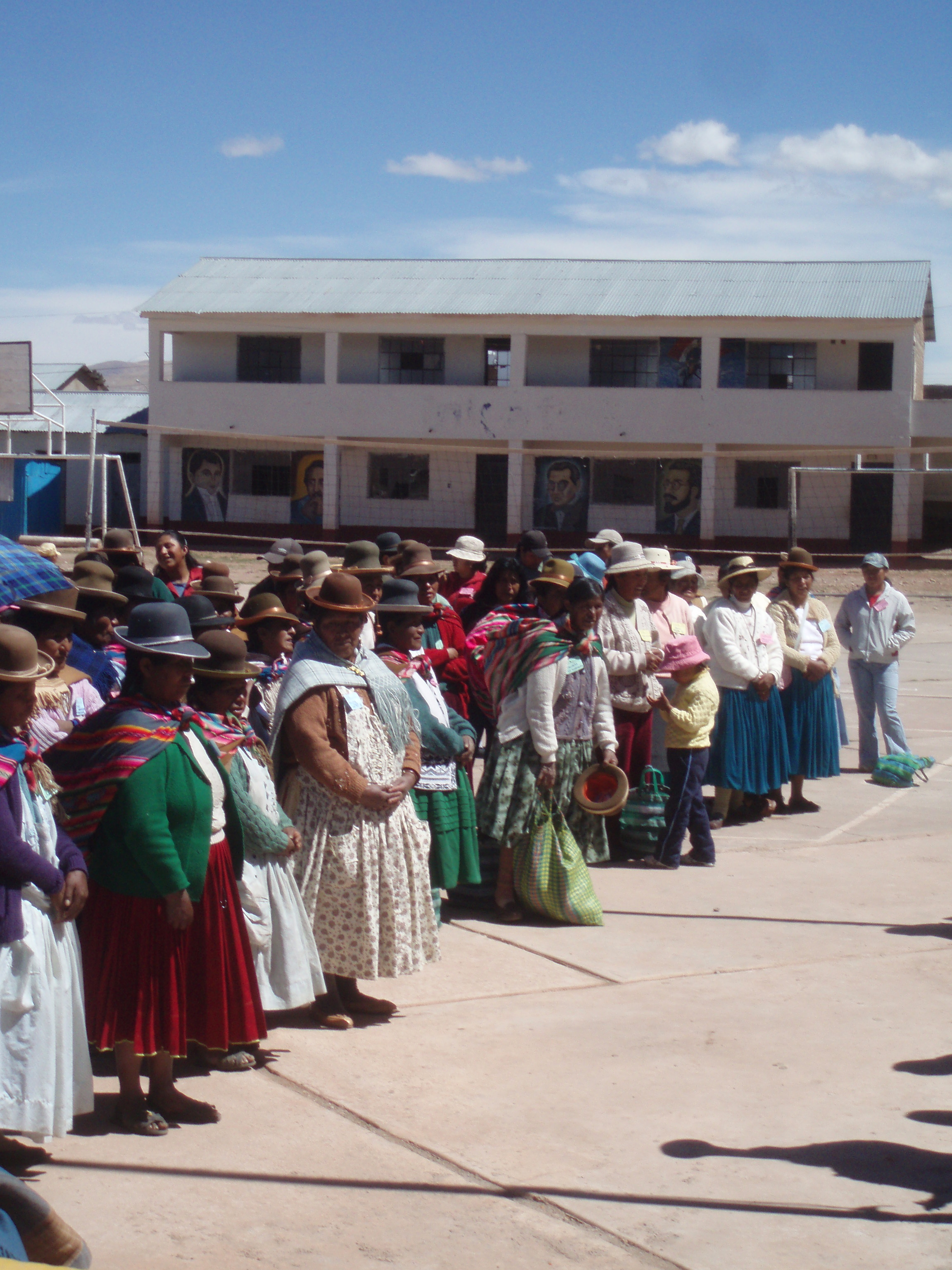
Clients from the organization I was working with in Peru gather for all-day workshop. Photo by Julie.

After a week of battling snowstorms and catching up with friends, it was time to get back to my life in La Paz – the one that, during the previous week home, had felt like a distant dream. A distant dream that I questioned how badly I wanted to return to, knowing there were just a few weeks to go.  And on my first weekend back I managed to see every one of the handful of friends (I now realize) I’ve gotten so close to since getting here in early November.

That’s another thing about being abroad – these types of processes are mysteriously accelerated. I think it’s something about everyone being in the same position, strangers in a new country, and maybe we have more in common to begin with if we are in fact both drawn to living in La Paz.

Side note: There is something unsatisfying about writing a post about the friends I’ve met abroad and referring only to other foreigners (and mostly Americans). But unfortunately it can be difficult to meet and develop a relationship with the locals, especially if you are in a place for such a short time. And while I have met many Peruvians and Bolivians that I’ve gotten close to, this time around, the lasting friendships seem to be with Americans.

Coroico, Bolivia. Photo by Julie.

The underlying point about friendships old and new is simply that the existence of one reinforces the value and importance of the other and vice versa. I wouldn’t be happy if I only had friends I’d known short-term and I can’t imagine I’d be happy if I’d never met anyone new after my childhood. The same idea can be applied to the more general “being home” vs. “being abroad.”  I’m probably more capable of appreciating and enjoying time spent at home because I know that the abroad and the adventure is out there waiting for me, and I’ll be getting back to it soon enough. Likewise, I am better able to enjoy time spent away because I know there is a home (and delicious blueberry pancakes) waiting for me.

It reminds me of a very cruel and unreasonable ”would you rather…?” I once heard: Would you rather be in your home country and never be allowed to leave it or be outside it and never be allowed to return (but free to travel to every single other country in the world)? This presents a tradeoff that would make living a satisfying life very difficult for me… so I’m grateful that the chances of ever having to make this decision are very slim!

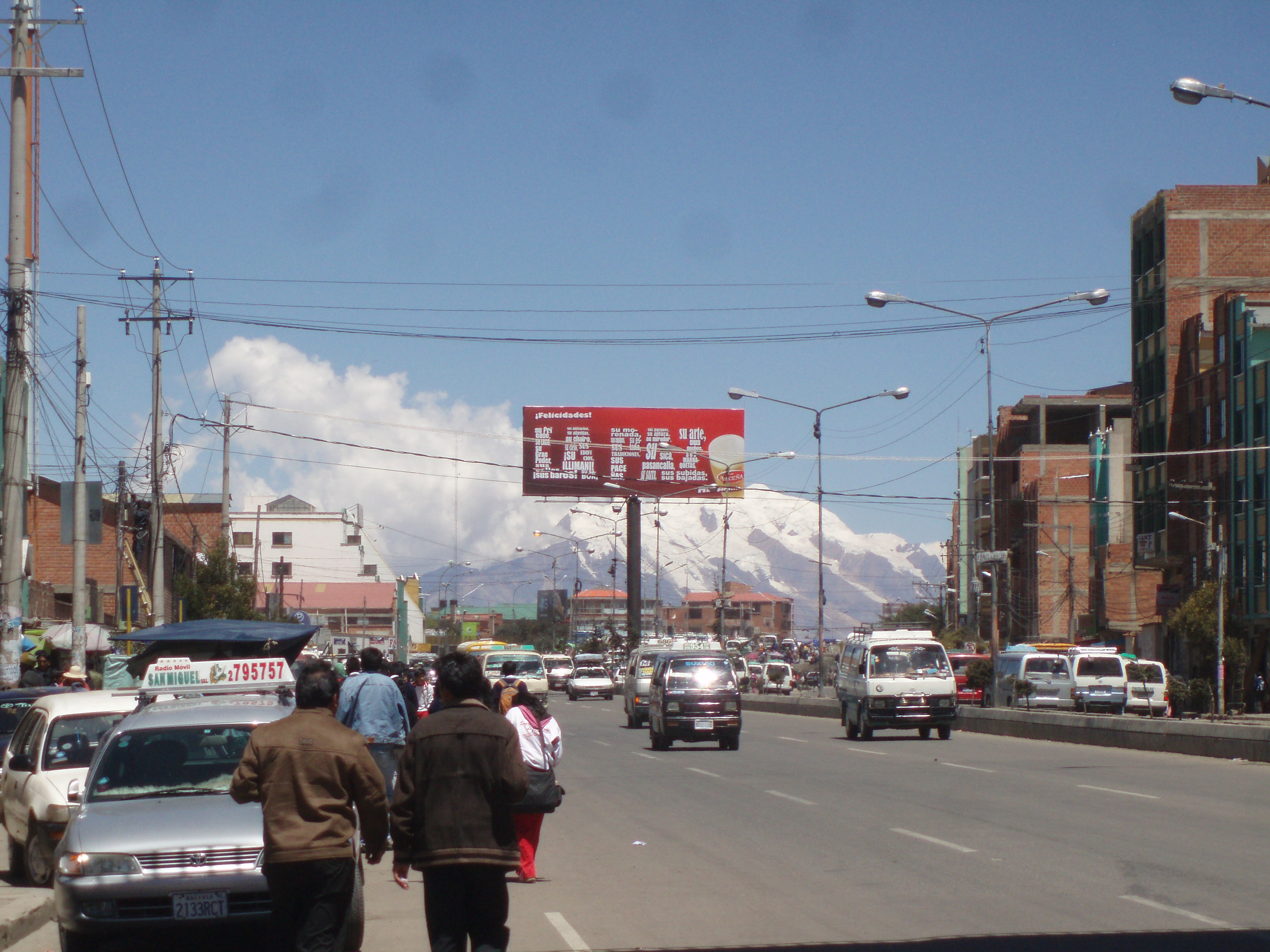
The view of the Illimani, taken from near Julie's office in El Alto, Bolivia. Photo by Julie.

So in the spirit of making grand statements about how the last 7 months have impacted me (in addition to the thing or two I’ve learned about microfinance), I’ve learned an important lesson about the life I want to live: Though I don’t know what country I’ll end up settling down in, I’ve identified the balance I’ll have to achieve if I want to be happy. So my next step? The simple and straightforward (ehrm?) task of achieving that balance.

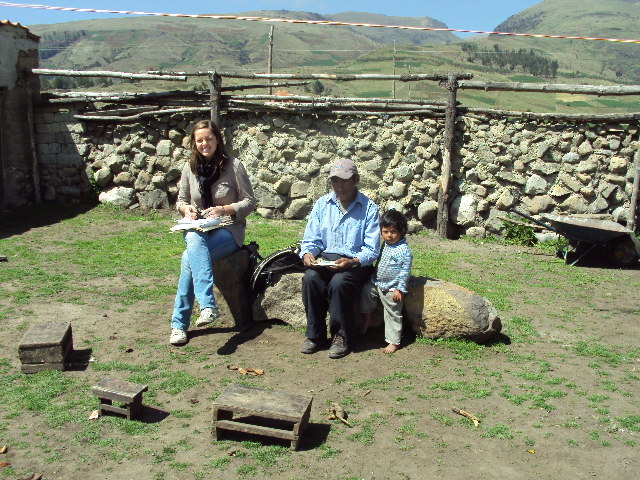
Julie visiting with a borrower outside Cochabamba, Bolivia. Photo provided by Julie.

Julie is the sister of Tavel’s friend Erik from Bowdoin, and while the two have yet to meet in person, for years now they have enjoyed a Facebook friendship that has quietly blossomed into a blogging friendship. You can read more about Julie’s South American adventures on her blog, Julie’s Kiva Adventures.

2 Comments

Filed under Bolivia, Contributor, Life Stuff, Peru, Travel

Love and The Journey

There is one day every year that forces many to look their love or lack thereof square in the eyes. This is a post about both a journey across the world, and the love that can come with it, or get left behind. Long-distance love is a journey in and of itself — one I know all too well.  It’s the kind of journey you don’t buy a ticket for; you stumble across it by accident, and it doesn’t say whether it’s going to be a one-way or a round-trip, but you inevitably find out at some point along the way because you just can’t resist its mysterious lure to an unknown place…

Sometimes you say goodbye to a person, you leave them behind for a journey on your own, but even after you’re gone you feel their invisible presence, like static electricity, like a good or bad ghost — it’s hard to really tell. But one thing’s for sure: no matter who gets left behind, no matter how far away you go, your heart — with all its beautiful stories and scars — well, it always comes with you. Sometimes it’s the only thing that does.

But I didn’t write this post.

I will let today’s TwT contributor, Mara, take it from here.

Love and The Journey

By Mara, with thanks to TwT for the space to share words from my journey!

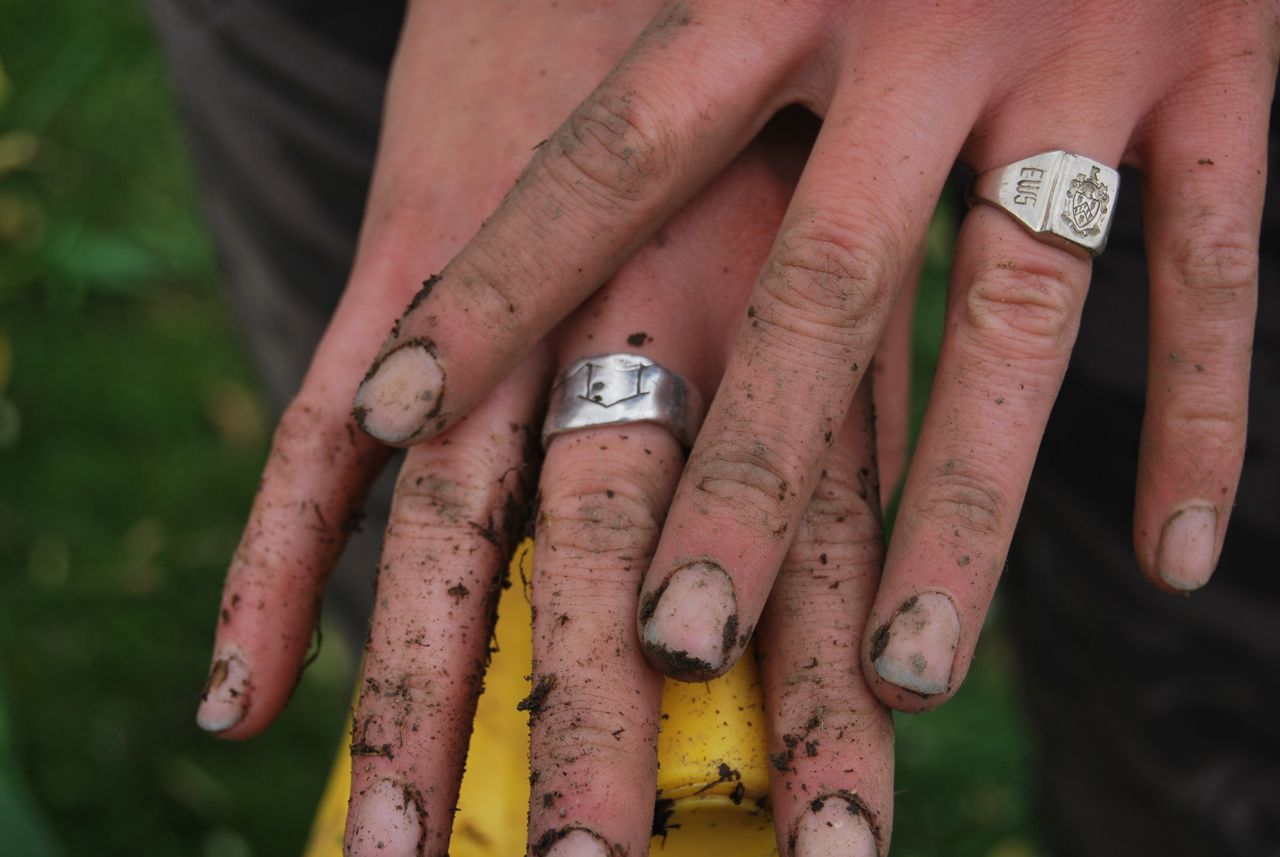
Digging new potatoes while WWOOFING. Photo by Mara.

I am living in New Zealand. And I am here because of love. Not love that is sprinkled like fairy dust, but love that spoke to me when I was on the floor wondering how I’d ever get up. Or love that somehow found me, miraculously, one among the crowd.

My journey in New Zealand began last November in Auckland with my boyfriend (B.) and a car we bought and called Hermione—a name I later happily discovered means patron of travelers.

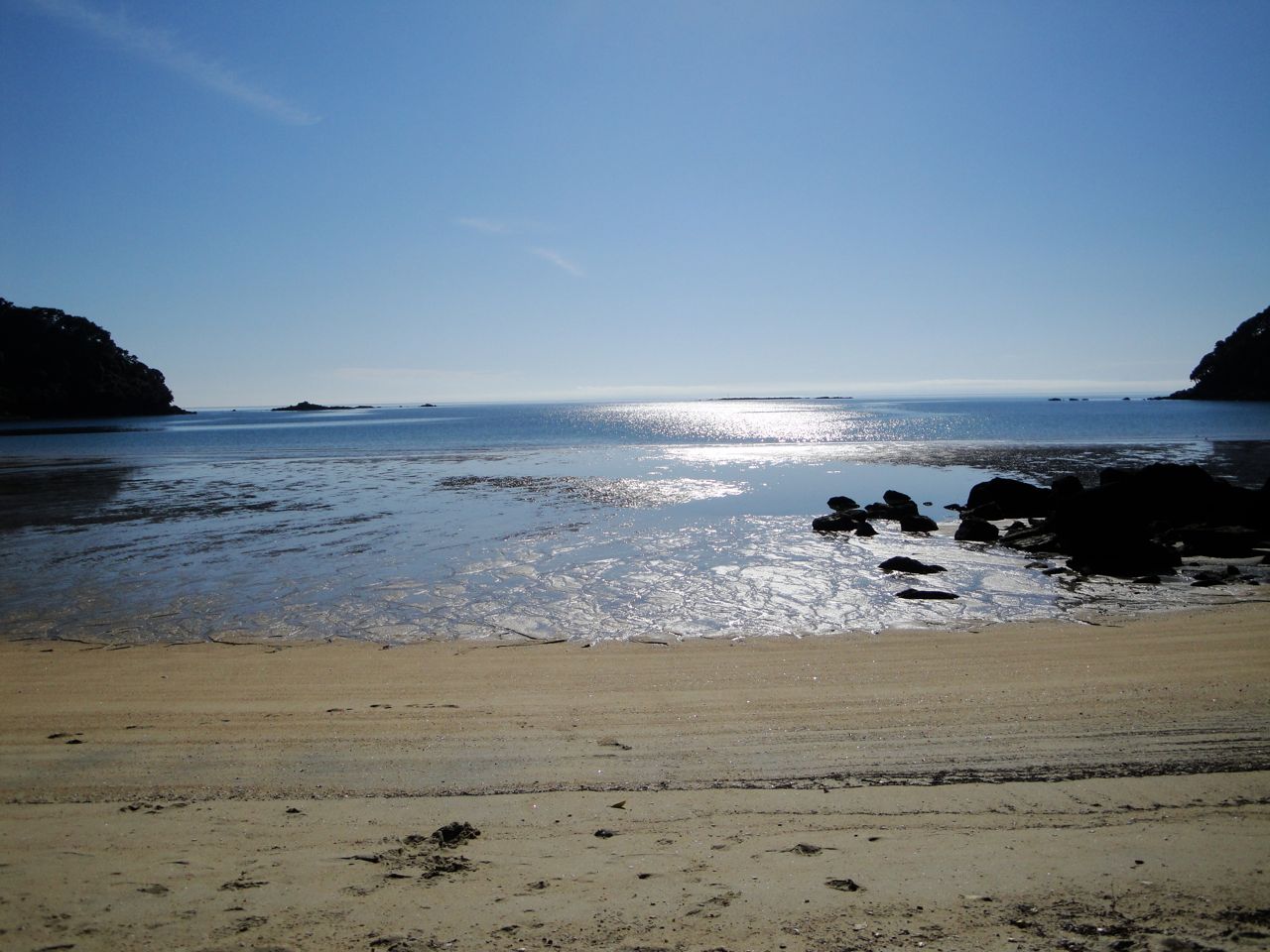
Bark Bay, Abel Tasman National Park. Southland, NZ. Photo by Mara.

Our trip started in Northland and by the time we covered ground in Southland and arrived to Christchurch, we drove 3,500 km. It sounds ordinary, writing it like that. But it was a journey that for me had begun years earlier.

And it was a journey designed with a fork in the road. When we booked our tickets, I knew B. would return to New York City after a few weeks. I’d stay in New Zealand for an undetermined amount of time. To write. To be. To find the space I needed and that eluded me in New York. To let me really soak in my life. And to maybe find direction towards work that really feels like “Yes!”

Crater Lake, Tongariro Alpine Crossing. Northland, NZ. Photo by Mara.

I still don’t know why that decision was so simple to make, because even what’s simple is not always easy. It was the start of something perhaps so predictable, but still unseen.

When B. and I met, love followed—as easy as breathing and as familiar as knowing.

But then, love always involves a leap, entrusting yourself to someone else. So, my faith was blind. Our love would stay strong. What distance would take away, love would transcend.

Mt. Cook reflection. Lake Matheson. Southland, NZ. Photo by Mara.

And then, recently, there was a moment just as I was waiting to turn in a line of traffic that it entered my mind—just one question. It was easy, the way doubt slipped in: would our love survive the journey?

One question to release the flood gates for all others. Is love transportable? Is love durable? Is love enough? Is love renewable?

If everything begins and ends with love, I had not considered finishing this journey with our love not still thriving. But how had I made that presumption? What had told me to take that chance?

Tongariro National Park. Northland, NZ. Photo by Mara.

You see, I had to first become the person who met B., because once I was lost and without love for myself. With work and in time, I became that person who loved herself strong enough to both choose love and leave a life in New York for the journey that would diverge in New Zealand and converge again in New York at some future point.

Mara sitting in a rock. Coromandel Peninsula. Northland, NZ. Photo provided by Mara.

Now my time in New Zealand is nearly over and soon I’m going to Indonesia. Though I’m getting closer to home, I’m leaving the last place our love physically touched the ground. What I must do out of love for myself, and what I must do out of love for B. are sometimes seemingly at odds, though I know the bigger picture blurs these relatively tiny movements, the daily decisions.

We speak and we write, and most days our love carries the vast ocean and time between us, but there are times when it feels strange to be so focused on me, and also a committed part of We. And that is where the faith, in all its obscurity, comes and takes my hand.

Faith inherently is blind, but in it I know that wherever the day or doubts might stray, love—transportable, durable, renewable love—is enough. Love has been my source and sustenance, and in it, anything is possible on my journey.

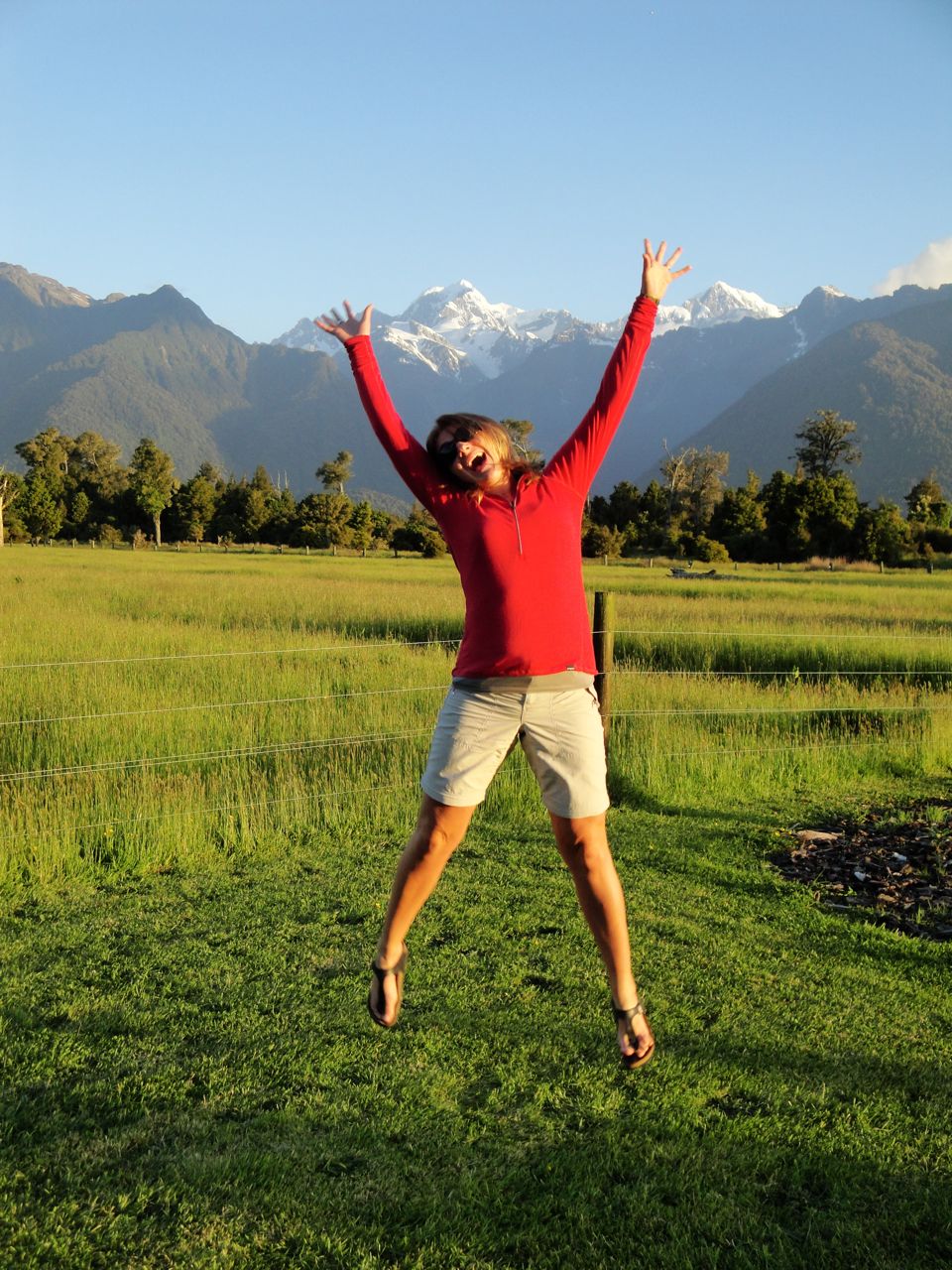
Mara jumping. Lake Matheson, Mt. Cook. Southland, NZ. Photo provided by Mara.

Mara worked with Wall Street investment analysts to incorporate environmental, social, governance issues into investment strategy, until she realized she needed to give her voice to the issues she cares about. Having deferred graduate journalism school, Mara now travels, writes and curates words in an eponymous blog–:mag:. Of all the magical places in the world, Mara loves to be anywhere where she could stay…just a while longer. For more from her journey, check out Mara’s blog, http://magwriter85.wordpress.com, or follow her on Twitter: @maragrbenick.

4 Comments

Filed under Contributor, Life Stuff, Love, New Zealand, Travel

Kenya in the Philippines

Here’s a blog post that takes us to a place TwT has yet to visit: The Philippines. It is written by one of my fellow travel bloggers from the Twittosphere, so it might have a slightly different vibe to it than most of my posts. Just go with it: February is all about variety — in tone, style, material, and the guest blogger’s relationship to TwT. So here is another spoonful of something different. Eat up!

And yes, I promise it will be all about me again soon… (HA! Please tell me that my sarcasm comes through…) Trust me: I’ll put the Tavel back in Travels with Tavel once I’ve starved you all just enough to miss me and my rambles a little bit more.

Calauit Island: African Animals Deep in the Heart of the Philippines

By Raymond, AKA Man on the Lam

Man on the Lam in Philippines. Photo provided by Raymond.

Yes, you read that right.  Just about the last place you would expect to find African animals roaming freely would be on a sun-soaked island in Southeast Asia, but there they are.  Over 5,000 miles from their original home in Kenya live a mix of giraffes, gazelles, zebras and impalas among others.  Little-known and little-visited, the Calauit Island Game Preserve and Wildlife Sanctuary is a curiosity indeed.

Entrance sign. Photo by Raymond.

The day that I went, I was one of four visitors.  That’s four for the entire day.  The day before, there were two.  The day before that, there was none.  There are no turnstyles or gift shops.  There are no crowds clamoring at the gates.  Well, there are no gates really.  The lack of crowds leads to its appeal, but it also makes you wonder how they manage to make a go of it at all.

Calauit Island lies on the Northwestern coast of Palawan in the Philippines.  In the 1970’s, the International Union of Conservation of Nature (IUCN) sent out an appeal to save endangered African animals.  Ferdinand Marcos, never one to turn down free stuff, and sensing a photo opp to boot, responded eagerly.  And are we glad he did. The park that resulted is nothing short of amazing.

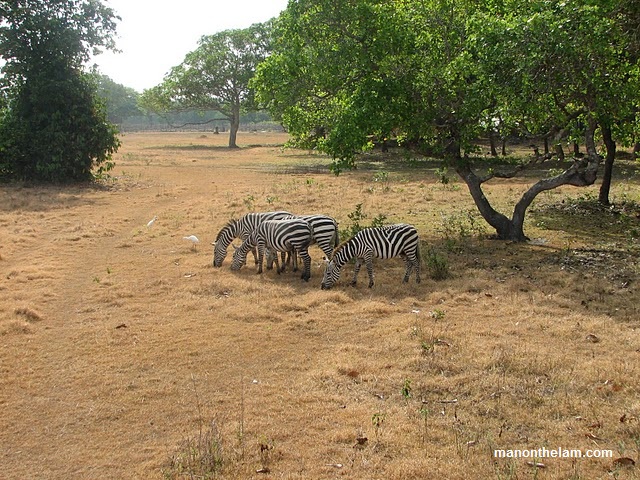
Kenyan Zebras in the Philippines. Photo by Raymond.

Initially eight species of animals, 104 in total,  made the long exodus.  Today those numbers have swollen to well over 600.  The Kenyan animals now co-exist with other endangered animals endemic to the region.  Calamanian deer, mouse deer, bearcats, and others, not to mention thousands of birds, are all part of the new host family for the displaced Africans.  The project itself has been a resounding success. The marketing however, has not.  And that’s a pity.

Furry creatures in the Philippines. Photo by Raymond.

While the furry four-legged variety here thrives, the cash-carrying two-legged variety is a rarity. The lack of tourists here has a great deal to do with the location. Getting there is nothing short of a trek in itself. After a 45 minute flight to Busuanga from Manila, you can expect up to 3 hours over some of the bumpiest dirt roads around.  The final 15 minute boat ride is a welcome respite.

Those who do make the journey though will be rewarded with the chance to get up close and personal with some amazing wildlife.  The island itself is an oddity as well.  More African savannah than Asian island paradise, the landscape lends itself to stunning vistas more reminiscent of  game parks in South Africa.

Giraffe in the Philippines. Photo by Raymond.

While overexposure for any park is never good, supporting wildlife sanctuaries like this worldwide is essential to ensure their ongoing success.  So if you find yourself in Southeast Asia, and longing for a bit of adventure well removed from the normal tourist trail, check out the Calauit Island Game Preserve and Wildlife Sanctuary for a once-in-a-lifetime experience.  And spread the word.  They need it.

Raymond is a man on the lam.  He runs a travel website at http://www.manonthelam.com with a focus on the upbeat, the offbeat, and the word on the street. His favorite place to visit is the Middle East (he is a self-described desert junkie). You can follow him on Twitter, @manonthelam1.

5 Comments

Filed under Africa, Contributor, Philippines, Travel, Wildlife

Two Trips to Africa

Today’s post takes us to Africa… twice. It is written by my friend Geordie. Now, I went back and forth on whether or not I should keep the first paragraph in because I feel silly and maybe even a little embarrassed posting it (gah, thanks G!), but… Geordie wrote it (not me – I swear!) and he intended it to be posted, so I will just leave it there and say thank you, G, for your kind words. Sorry to anyone who reads it and rolls his/her eyes… Just pretend it’s not there I guess. Or, just know that I have some pretty amazing friends.

Wait! I just realized that the last time Geordie contributed to TwT, it was the exact same time last year… Here is his post, Gone to Dogon Country, from February 6, 2010. Cool.

My Two Trips to Africa

By Geordie

Tavel once saved my life. No, not in the literal sense (although that would have been pretty amazing) but in an extremely important figurative sense. I will not take up any more of your time than necessary with this totally sincere panegyric, nor will I spell out in painstaking detail the improvements in my life for which Ms. Tavel is responsible. Suffice it to say that her keen emotional intelligence, her compassion, and her uncanny knack for finding just the right way to say just the right thing (“Focus on people, not your thoughts”), has made her one of the best friends I’ve ever had. I shudder to think where I might be right now without Tavel, and that is only a slight exaggeration. But enough of this. On to the exploits.

I am going to try and do a difficult thing in this post. And that is to combine a very serious subject with one that is not quite as serious. I have my reasons for doing this, and I will trust you to trust me on this one. And I have faith it will work out, so perhaps I should just stop talking.

Mopti, Mali (December, 2003)

Picture, if you will, a young man of 20. He is spending the year in Africa on his junior year abroad. It is Christmas vacation, he is travelling in Mali, and he finds himself on Christmas day with scarcely a penny to his name (the only ATM machine in the town being broken). That evening he is boarding a boat to Timbuktu (yes, THE Timbuktu), for which he has bought a five dollar ticket which entitles him to a concrete bed under the stars. With his final few francs he purchases a thin blanket for himself and his platonic female travelling companion. The temperature that night is frigid. They are sleeping on the concrete upper deck of a ship. To have purchased a bed would have been more expensive and shamefully less adventurous. Still, it is very cold. He eventually abandons his companion (thus depriving her of his body warmth, only later does he realize) and eventually finds warmth on the floor of the second class bathroom with Ayn Rand’s The Fountain Head for a pillow. It is miserable to be sure, but what a story! That morning, he goes up on deck and sees the entire sunrise — total darkness, merging into streaks of pink and purple before finishing as a vault of brilliant blue sky. All of this while floating down a river that seems lost in time, surrounded by men in robes and turbans lounging on giant burlap sacks. Even as the sun is rising he scribbles frantically in his black moleskin notebook, trying to capture every moment of this glorious experience.

Kigali, Rwanda (January, 2011)

Picture, if you will again, this same young man, now a robust 27, standing in Kigali, Rwanda. The mission is different this time. He is not here for pleasure, nor is he here for adventure. Or if it is adventure it is certainly of a different sort. The young man is now a PhD candidate at a large Northeastern university. This  university has agreed to pay for this young man to travel to Rwanda in preparation for his future writing (dissertation, journal articles, books, who knows?).

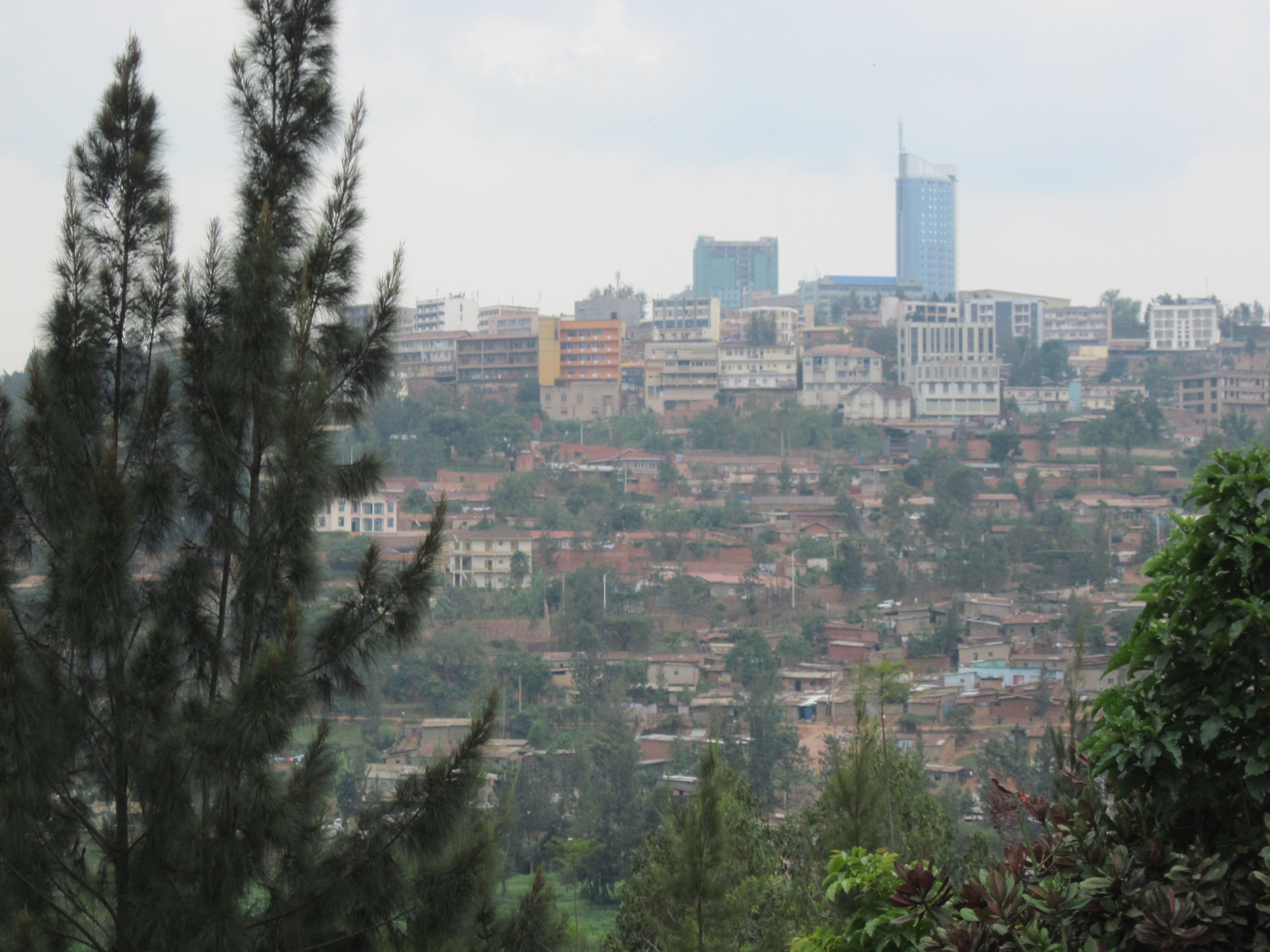
Kigali Rwanda. Photo by Geordie.

Traveling to Rwanda is a difficult undertaking, and not just because it is far away and getting there is tremendously expensive, but because of what happened there. The more time the young man spends in Rwanda, the more he speaks to people about what happened, the more he visits the different sites where the massacres took place… He feels something changing, or rather something becoming more the same… Well what?… It’s hard to put into words. It’s just one of those things. One of those things that’s hard to explain. And one of those things that he’ll spend the rest of his life trying to explain. That is his job, he realizes, trying to explain, understand, that thing he feels that feels impossible to explain.

Dogon Country, Mali (January, 2004)

The adventure for this young man continues. Timbuktu is one and done. There was a camel ride, eating with his hands out of a communal bowl while squatting outside a hut in the desert. He met a group of other tourists on the ferry, and now they call themselves the “Timbukcrew.” He went on a camel ride wearing a blue turban.


Geordie in Tumuktu, as seen in previous post. Photo provided by Geordie.

But Timbuktu is done. Now they are in Dogon country, a beautiful part of Mali, except they are there with a lying, cheating Malian guide, who grows angry at us for not giving him more money. He flecks my face with spittle as he admonishes us for our lack of understanding. He is not a cheat, we are simply ignorant. Since no one else in our group speaks French, it is I, the French major, who gets shouted at the most. However, despite the yelling and its mind-numbing unpleasantness, we can’t deny that Dogon country is beautiful — simply gorgeous. Like the American southwest, except with whole villages built into these enormous hillsides, blending in seamlessly as if the huts had risen organically out of the earth.

Geordie in Dogon Country, as seen in previous post. Photo provided by Geordie.

I sit on a mountain ledge, our trip completed, looking out over this flat, endless plain. My god, I think, as I look out, My god. Life. Everything. Life is so complete right now. It is everything right now. I’m in the moment. I’m here. I’m in Africa. Incredible. Just simply f’in incredible. Sure, later, there’s a trip to the police station because half our group won’t pay the guide, and sure there’s a 50 hour train ride back to Senegal (my home during the year abroad) where enormous, loquacious women take up all the seats in our compartment and where I have no bed, a trip (the train ride) that feels less adventurous and more just plain shitty. And then when we get back to Senegal I get really sick, and eat almost nothing for a week. Did I mention during this whole trip I was missing a front tooth? But it was glorious. Simply, simply, simply glorious.

Nyamata, Rwanda (January, 2011)

Most of the memorials in Rwanda are sites where massacres occurred that the government has since converted into memorials. In Nyamata, around 10,000 people went into the local church, in the vain hope that the killers would balk at committing massacres in a sacred space. I am standing outside the church with my group, listening to a guide tell us what happened. The Tutsis hiding in the church barricaded the door from the inside, she explains. Unable to break down the sturdy  metal door, the Hutu militia then used a grenade to blow open the door of the church. I should clarify that the people hiding inside were civilians (ordinary men, women and children) not soldiers. They were the neighbors, and sometimes also the relatives of the people trying to kill them.

In the door of the church you can still see the large hole blown by the grenade. You can still see the holes from the shrapnel of the grenade on the ground by the entrance of the church. We move inside the church, and the guide points out that there are also holes in the ceiling of the church because they actually throw grenades inside before going in to finish people off with guns and machetes. Inside the church are dozens of wooden benches covered with clothes of the victims. Just rows and rows of dusty brown tee-shirts, pants, hats, dresses…The church had formally shown exposed bodies but they had since been removed. One body, that used to be prominently displayed, now has its special crypt beneath the floor of the church. There is another crypt nearby where you walk down a narrow flight of stairs into a small corridor where there are bones and skulls arranged on a wooden platforms that are ten feet high. The effect of all of this is at one powerful and surreal. What you find most moving often surprises you. I got choked up looking at the blown off bottom section of the door. At a “Cornell” sweatshirt taken from one of the victims.

It’s also so overwhelming and so awful that your mind sort of shuts off. It wasn’t until I got back to the States that I could really process everything I’d seen (as much as anyone can ever really “process” seeing something like that).


Geordie with Rwandan Friend. Photo provided by Geordie.

While the rest of our group was wrapping up the visit at the church, I noticed that one of our Rwandan chaperone’s was sitting in our group’s van by himself. He was about my age and we had gotten friendly the day before so I decided to go over and keep him company. As soon as I sat down he said:

“I was here, you know.”

I was stunned.  “Here in the church?”

“No, no,” he said. “But I came by after it happened. I saw the bodies and everything, it was awful.”

“Yeah,” I said, “that must have been awful.” (What else can you say?)

“Yes,” he said, “It was awful. The bodies, the blood, everything, it was awful”

Rwanda has made remarkable strides since the genocide happened. The government, which is unfortunately far from perfect, has nonetheless done a remarkable job of keeping the country stable while allowing it to grow economically. When you arrive in Kigali today, you are struck by how clean and orderly it is (one of the governments new initiatives was to ban plastic bags). It is also a beautiful country, (Rwandans calls it “The Land of a Thousand Hills”) where you are almost always in sight of a lush, green mountain tops.

View. Kigali, Rwanda. Photo by Geordie.

Ahh, but methinks this blog entry is drawing to a close. Perhaps you are asking, so what of this young man (now almost 28) with whom you have shared the last few moments of your life? Well, he is back in the northeast, reading massive piles of books in French, thinking about past adventures, and figuring out how to do good in the world from his tiny corner of academe.

There we have it my friends. Thus ends my contribution to this blog which I have been such a fan of for such a long time. Another tip of the cap to Mademoiselle Tavel, to whom my entry owes its very existence, on so many levels. Hasta luego, compadres…

Geordie is in the first year of a PhD program in French Literature at the University of Pennsylvania. He attended Bowdoin with Tavel where he played squash, did improv, and watched ungodly amounts of French Canadian TV. His favorite place to travel is Africa, but he loves France as well.

If you want to learn more about the genocide, Geordie suggests Philip Gourevitch’s book “We Wish to Inform You That Tomorrow We Will Be Killed With Our Families”, the Front-line documentary “Ghosts of Rwanda” (available on Youtube), and, as a feature film alternative to Hotel Rwanda, the movie “Sometimes in April” which is also available on youtube.

There is also a wonderful charitable organization that helps orphans of the genocide. It was started by Geordie’s former college professor who got him interested in Rwanda. If interested, you can learn more about it and/or donate here:  http://friendsoftubeho.org/.

5 Comments

Filed under Africa, Contributor, Life Stuff, Travel

2011 Travel Wish List

Hello 2011!

I’ve decided it’s going to be a great year, so let’s make it happen.

Last year, I asked you all to put together a travel wish list for 2010. Check out the wish lists some of you shared here (see comments). Today, my question is: Did you make it to any of the places on your wish list in 2010? Also, do you have any travel regrets (not that I believe in those) or leftover wishes? Did 2010 take you somewhere completely unexpected, instead?

I think we know MY answer to that last question… (Um, YES.)

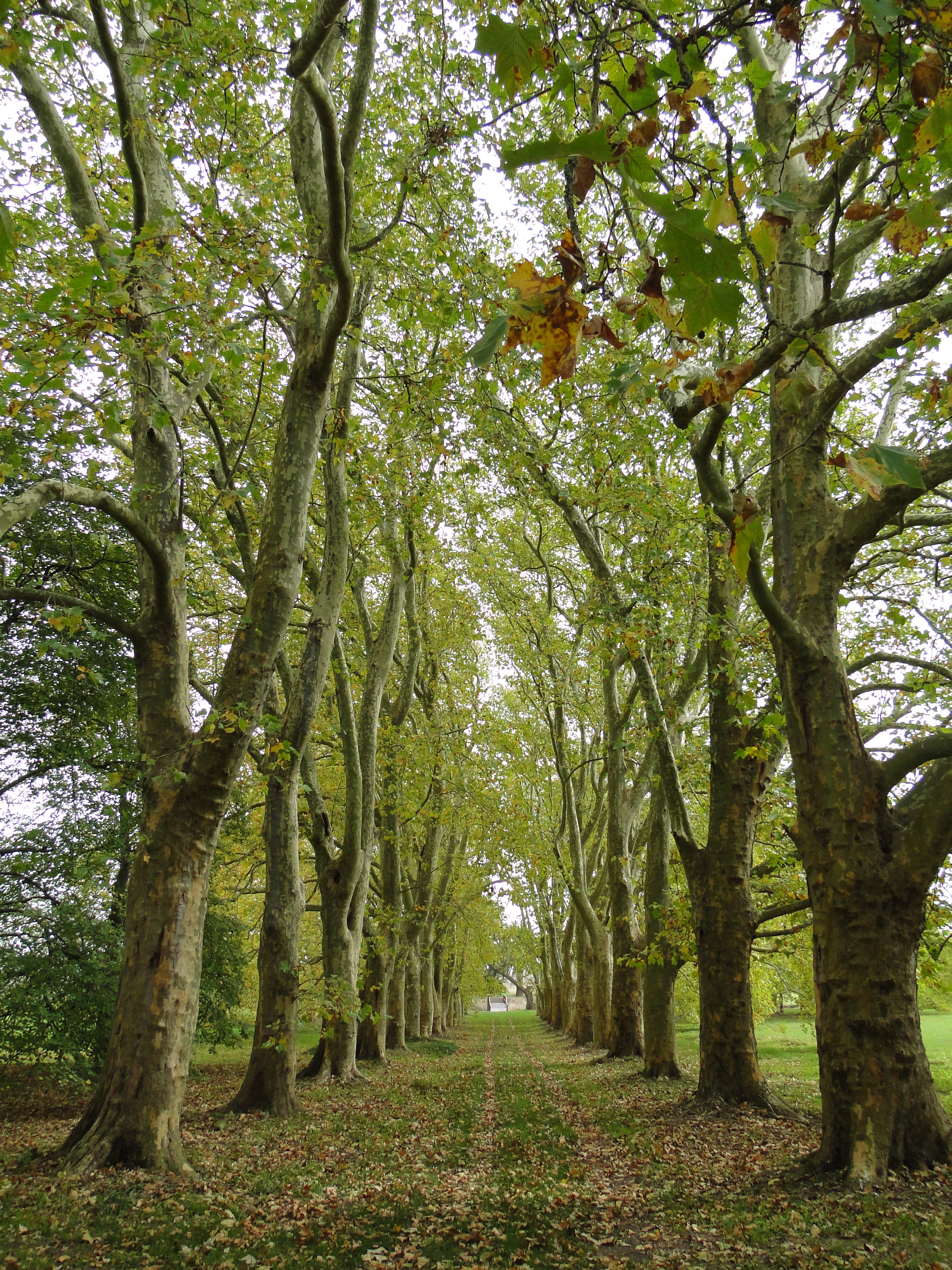
Trees. Las Pampas, Argentina. April 2010.

2011 is going to be the first year in over five that I have to trim down my wish list — at least in terms of what is “realistic” (I put quotations around “realistic” because I really believe one NEVER knows — the boundaries of “realistic” are malleable). But isn’t a wish list about hoping and dreaming, even if you aren’t really sure what’s possible? I think yes. So here is a quick list of 5 places I would absolutely LOVE to go in 2011… Financially feasible, or not. Check it out, then share YOUR travel wish list  for 2011 (no matter how simple, grand, or unrealistic) as a comment.

1. Tanzania and/or Kenya. Yes, it’s time for some Africa in my life. I have wanted to go to Tanzania since I was a kid, and it continues to stay at the top of my travel wish list. While I’m down there, I would never forgive myself if I didn’t als0 stop by Kenya. I don’t know when, I don’t know how, but some day — maybe this year, maybe fifty years from now — I will GO to Tanzania. And I cannot wait.

2. Southern Spain. Sevilla, Granada, Cordoba, Malaga… How have I NOT gone to Southern Spain yet?! FAIL –> MUST.GO. Shame on me and my Southern Spanish roots.

3. India. The only country I have been to in Asia is Japan. This does not, in any way, reflect all the places in Asia that I WANT to visit — ie, Thailand, China, Cambodia, Vietnam, Laos… But India seems to remain at the top of my Asia wish list. I’m not sure how I will make this trip happen, but a girl can daydream.

4. Morocco. The architecture, the mixing of French and Arabic in the air, the food, the mint tea in those tiny glasses, the sound of prayers, the smell (well, I imagine it smells very interesting)… There is something exotic and sexy about this country (and its dark, mysterious men…) and I want a piece… At least just a taste. And I don’t mind if it’s completely imperfect, and maybe even a little dangerous… In fact, both are encouraged.

5. Puerto Rico. Yes, I’ve been before. But it’s so close, so accessible, and has so much personality. Plus, it’s becoming Miami-ified, I believe — which is both a positive and negative thing for obvious reasons. Either way, I’m curious to see this sassy Island from a different perspective than when I was a 5th grader on a family vacation. This time around, I’d like to take a tall, dark and handsome romantic interest (must love spandex). Any takers? Hehe.

So there you have it. Please ignore my occasional references to tall/dark/handsome/mysterious men. I may have gotten a little carried away there…

Cheers, as always, to 2011 and LIVING THE DREAM — even if, sometimes, the dream changes.

15 Comments

Filed under Life Stuff, List, Travel, Uncategorized